This is the house page. It is written for Cardinal Insulation of Boca Raton LLC. Quotes are prepared by Russell Y, a building scientist who is BPI certified and certified to perform blower door testing. A blower door result is reported only when the test is run. The listing this page points at is the Boca shop, 4263 NW 1st Ave, Boca Raton, FL 33431.
A house is a boundary, not a pile of product
Residential insulation is the material that slows heat moving through the shell of a house. In this climate the shell that matters is usually the ceiling under a vented attic. The roof is tile or shingle over a deck. The attic air is hot on purpose, because the soffit and the ridge are supposed to let that heat out. The rooms below are what the air conditioner is trying to hold. Insulation on the attic floor is the layer between those two temperatures.
Heat moves three ways. Conduction is heat passing through a material. That is the part insulation is for. Moving air is the second way, and insulation that is full of holes does almost nothing about it. Radiation is the third: the hot roof deck warming everything under it. A radiant barrier on the rafters does not replace missing depth on the floor. A new tile roof does not either. The rooms feel the ceiling, not the color of the tile.
That is why a residential quote here starts with a question, not a brand. Is the attic staying vented over a flat ceiling? Then the job is blown-in on the floor. Is a piece of the roof supposed to be inside the house, a bonus room or a set of ducts that should stop baking? Then the job is spray foam on the deck and the vents close. Is the wall open because the house is being built or gutted? Then a batt can fill the bay. Selling all three as the same insulation package is how a house gets the wrong boundary.
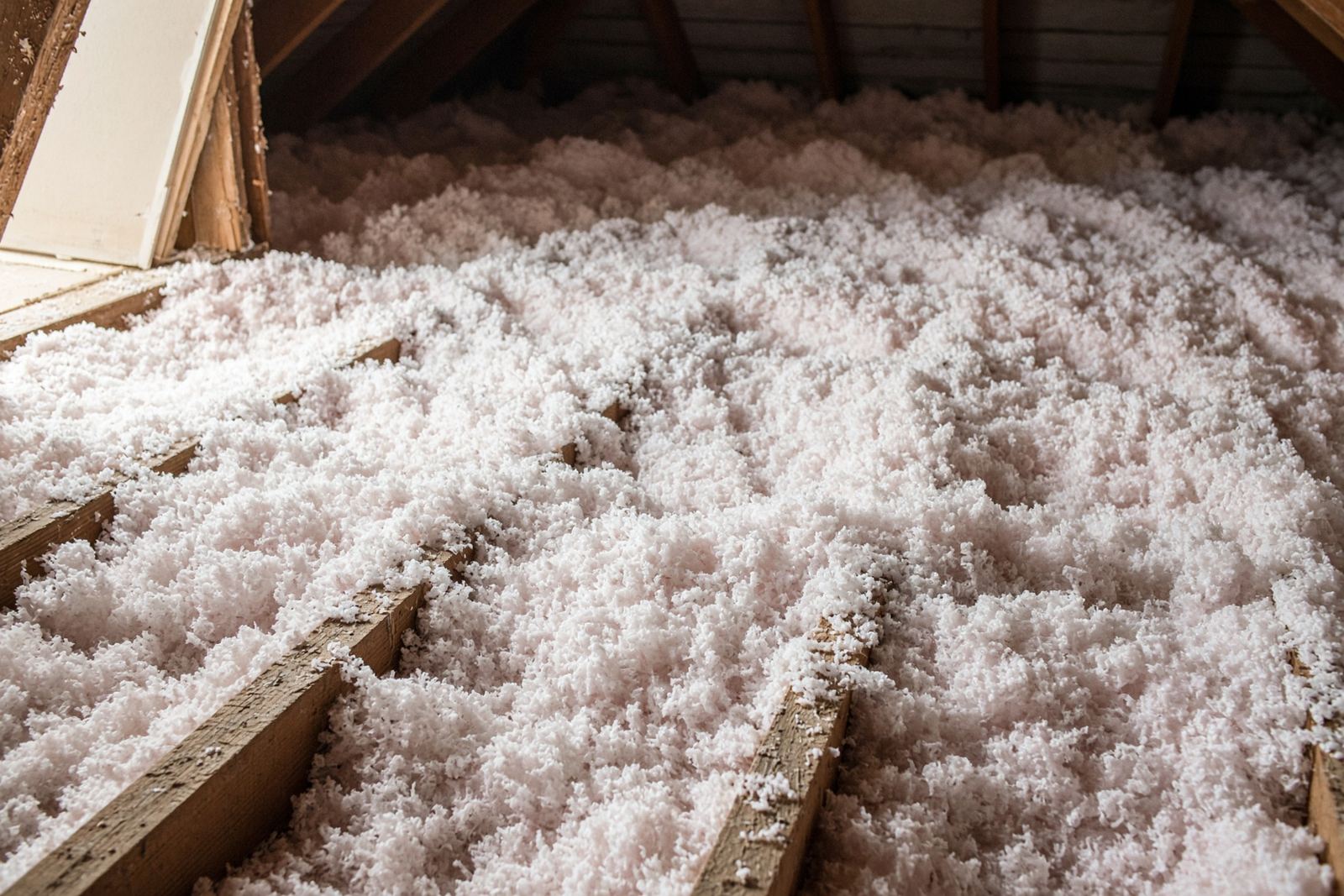
The ceiling is the residential job
Most of the houses we open in Boca Raton, Delray Beach, Boynton Beach, and the Broward cities we drive have a flat ceiling and a vented attic under tile. The original fill is often a few inches of fiberglass that has settled. At about R-2.2 per inch, four inches is about R-9. The rooms feel it after lunch, when the deck is hotter than the outside air and the air conditioner runs without catching up. The upstairs bedroom over the garage is the room that tells on the attic first.
New blown fiberglass is about R-2.5 per inch. New cellulose is about R-3.6. From a bare ceiling, R-38 is about 15 inches of new fiberglass or about 10.5 inches of new cellulose. Over that typical R-9, the gap is about 12 inches of new fiberglass or about 8 inches of new cellulose. The inches have to be even. A thick pile by the hatch and a bare edge at the soffit is not an average. Soffit air on a tile roof washes loose fill off the top plates. Baffles hold it back so the vent stays open and the plate stays covered. Markers, about one every 300 square feet, are how you read the depth from the opening.
The long version of that install, including the bag math, is the blown-in insulation page. The neighborhoods are on the Boca Raton page. This page is the decision that comes before the hose.
Attic ventilation
A vented attic is supposed to stay outside the house. Air comes in low, at the soffits, and leaves high, at a ridge vent or a set of vents near the peak. That flow is what carries the heat off the underside of the roof deck. Insulation on the floor does not replace it. Closing the vents because the attic felt hot makes the deck hotter and leaves the ceiling to do a job the roof was supposed to share.
The 2023 Florida Building Code, Residential, Section R806, sets the minimum net free vent area at 1/150 of the attic floor. A 1,800-square-foot attic is 12 square feet of net free area, intake and exhaust together. The code allows 1/300 when the vents are split, with about 40 to 50 percent of that area up high, within 3 feet of the ridge, and the rest at the eaves. Net free area is the actual opening after the screen, not the size of the hole in the soffit. A painted-over soffit and a ridge vent buried under a previous blow do not count.
The failure we see on a blow day is the eaves. Soffit air on a tile roof pushes along the top plates and shoves loose fill into the vent. The middle of the attic looks deep. The perimeter, over the outside walls, is bare, and the intake is packed shut. A baffle at each bay holds the insulation back, leaves the soffit open, and keeps the plate covered. We put the baffles in before the hose starts. Blowing first and hoping the fill stays off the vent is how the next crew finds a ridge vent doing nothing because no air can get in.
A bath fan that ends in the attic is not ventilation. It is wet room air dumped onto the deck. The fan needs a dampered duct to the outside. A gable vent on one wall, with no soffit intake, mostly stirs the same attic air. Turbines and a powered fan do not fix a soffit that is full of insulation. We do not add those to an insulation quote and call the attic ventilated.
Ventilation also does not dry a roof leak, and it does not let you skip the insulation. The deck can be ventilated and the ceiling can still be at R-9. Those are two layers. On a blown-in job the attic stays vented. The day the attic is supposed to come inside the house, the soffit and the ridge are closed and the foam goes on the deck. Leaving the vents open over a foamed deck mixes the two assemblies. We pick one. We do not sell a turbine, and we do not close a working soffit to make the fill look thicker.
Walls, slabs, and what Florida houses usually are not
A wood-frame wall in climate zone 1 has a prescriptive cavity insulation of R-13 in the same Florida table that sets the ceiling. Concrete block, which is what a lot of these houses are, is a mass wall. The table's mass-wall number is not an invitation to drill a finished living room and blow it because an attic quote was the thing the owner called about.
Floors over a garage, or over a porch that was enclosed later, are real. A slab on grade, which is the usual first floor here, is not an attic and it is not a crawl space. There is no R-30 to add under the tile in the kitchen. People ask because a cold-climate page told them to insulate the floor. That page is about a house standing over outside air. This one is not.
A garage ceiling under a bedroom is the exception we do see. It is a small attic, often with no hatch worth the name, and it is the reason the bedroom over it will not cool. That is still an attic-floor job if it stays vented, or a roof-deck job if the space is being brought inside. We look before we name the product.
The code number for a house
Palm Beach County and Broward County are climate zone 1A. Table R402.1.2 of the 2023 Florida Building Code, Energy Conservation sets the zone 1 ceiling minimum at R-30 and the zone 2 ceiling minimum at R-38. Cardinal's blown-in standard on a vented attic is R-38. That is above the zone 1 floor and equal to the zone 2 ceiling in the Florida book. It is not R-49 and it is not R-60. Those numbers are what the unamended national model code prints for colder zones.
The same code says air-permeable insulation shall not be used as the air seal. Fiberglass and cellulose are air-permeable. They slow conduction. They do not stop the air leaving the rooms through a top plate, a can light, a chase, or a hatch. The seal is a separate hour, before any bag is opened. The page for that hour is air sealing.
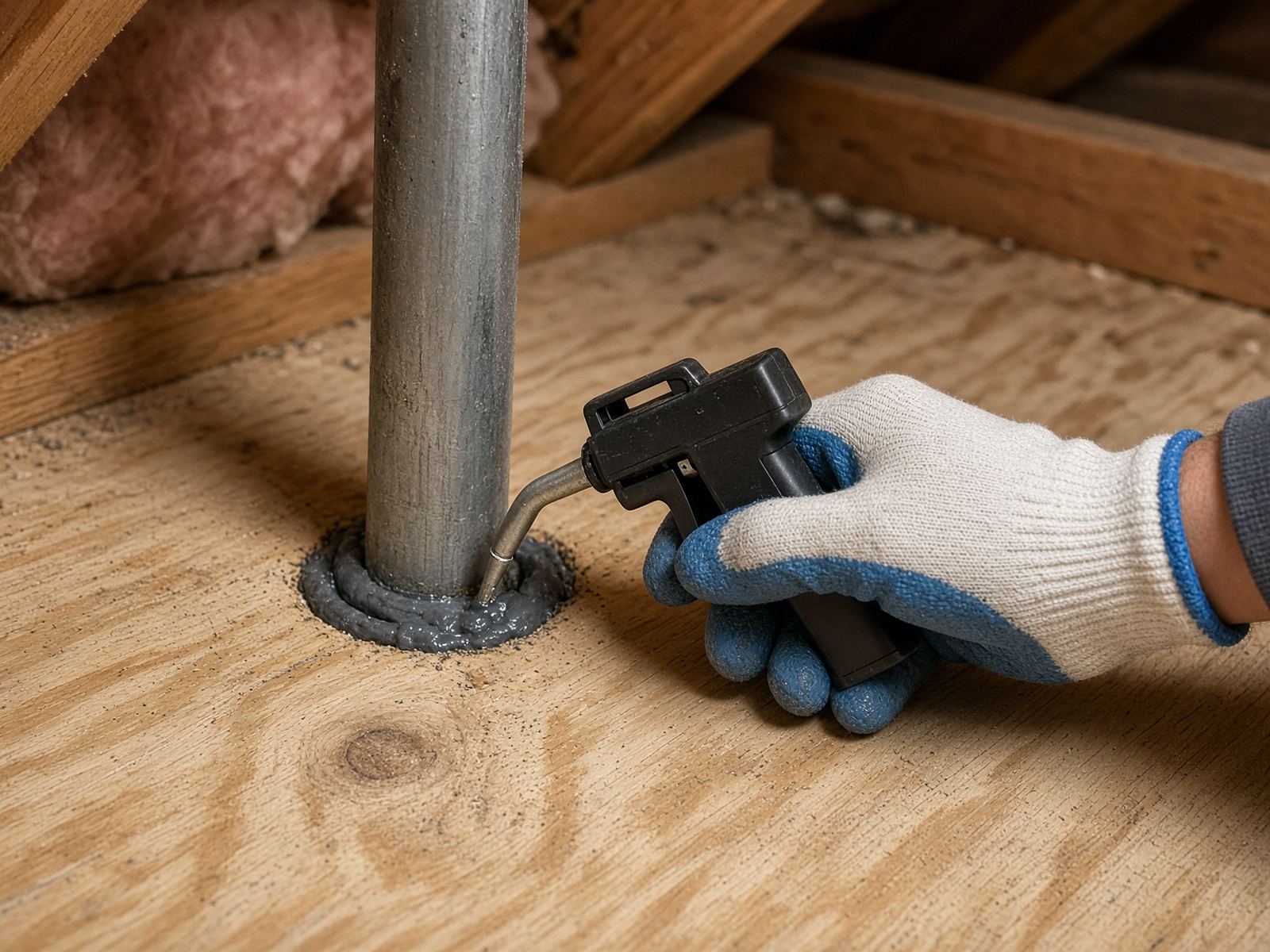
Batts, blow, and foam are not substitutes
A fiberglass batt that fills an open stud bay, cut to the bay and not stuffed past its thickness, does the job it was made for. An attic full of batts from the year the house was built has slumped, pulled off the plates, and left the wires proud. Laying a second batt on top does not fill those gaps. Blowing over dry batts does, after the leaks are sealed. If the batts are wet or full of nests, they come out. They do not get buried under a new layer because burying is faster.
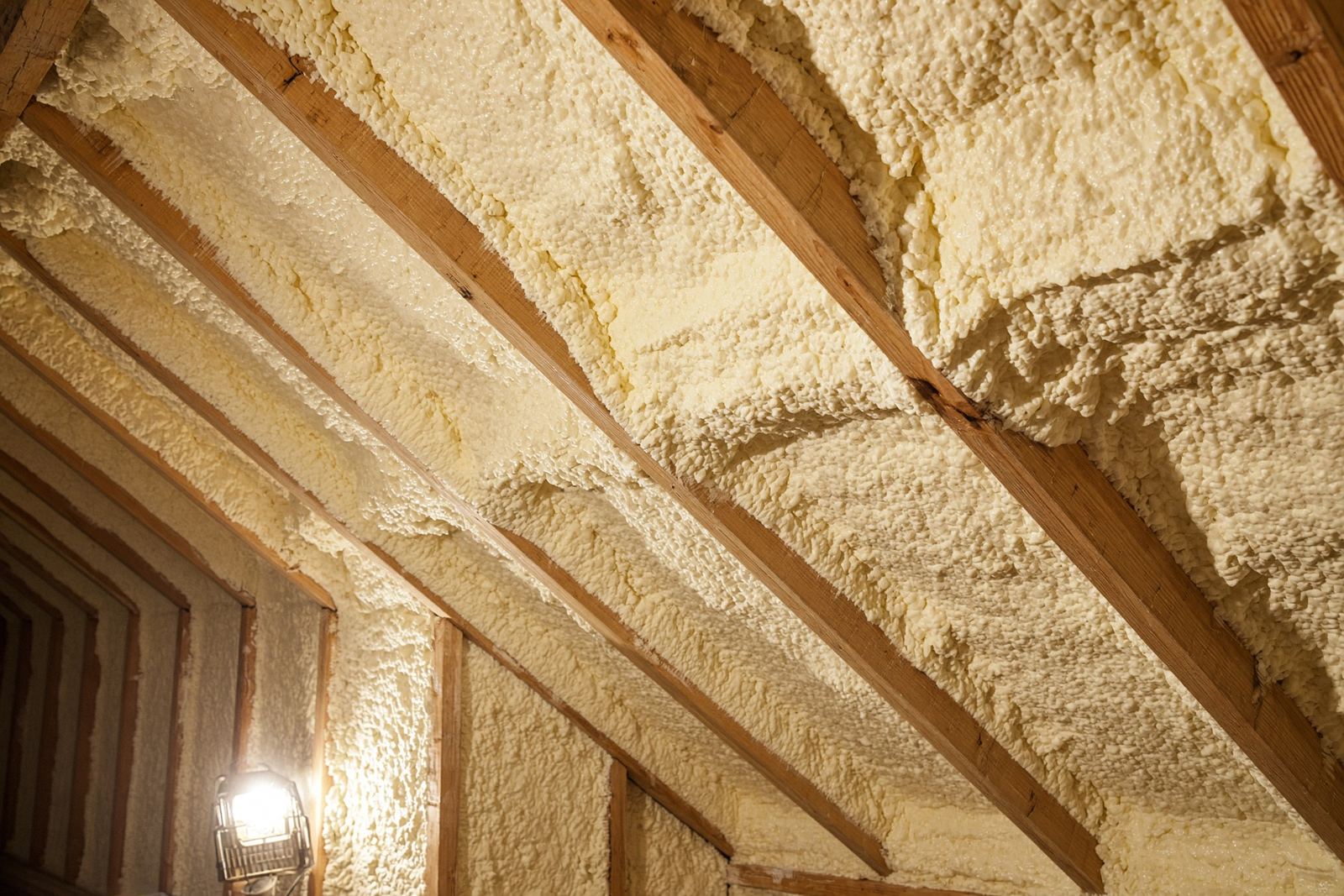
Spray foam belongs on the underside of the roof when that attic, or a piece of it, should be inside the conditioned house. The soffit and the ridge close. The attic air then moves toward the temperature of the rooms, and ducts that used to sit in a hot vented space sit inside the boundary. Two inches of closed-cell is about R-13. That coat is not an R-38 attic. Open-cell foam is about R-3.6 per inch and can hold water if the roof leaks. Closed-cell is about R-6.5 per inch and resists water better. Neither one is a roof repair. Foam smells while it cures. People and pets leave. A blown-in day does not require that.
Do not foam the deck and leave the attic vented. That is a mixed assembly, and it is the mistake we talk people out of. The side-by-side is on which insulation belongs in a Florida house. The foam install itself is spray foam.
Dry fill stays. Wet fill does not.
A residential top-up assumes the material already in the attic is dry and is not full of rodent mess. We count it at the thickness we can measure and we blow over it. Wet insulation, a deck that has been rained on, or nesting means the old material comes out first, at its own price. Blowing over it traps the water against the ceiling. Sanitizing the deck after that removal is a third price. It is not mold remediation for the rooms downstairs, and it is not a promise that a closet will stop smelling. If the animals are still inside, a licensed pest-control company gets them out before we close the last hole. We do not claim that license.
Those two jobs have their own pages: insulation removal and attic sanitizing. A quote that folds them into one attic number is hiding the work.
A worked house, not a price per county
Take a common house. 1,800 square feet of attic. Four inches of settled fiberglass. Four times 2.2 is 8.8, about R-9. R-38 minus 8.8 leaves 29.2 of R-value still missing. Divide by 2.5 and the new fiberglass is about 12 inches, level. The planner on this site prices that gap at $2,100 to $3,350. That is a planning range. It is not a bid. A bigger attic, a long hose from the driveway, a pull-down stair, or a removal moves it. A page that prints one installed price per square foot for every house in Florida is averaging away the only fact that sets the price: how many inches are already there, and whether they can stay.
You can run your own depth through the attic planner. Bring the number to the call. We still open the hatch before the number becomes a bid. Photos of the hallway do not show the far corner of the attic, and that corner is where the depth usually fails.
What a finished ceiling will not fix
Supply ducts in a vented attic are insulated on their own, at least R-8, and they still sit in hot air. Insulating the floor does not move those ducts inside the house. A disconnected supply, a crushed flex run, or a return that is sucking attic air will keep the bill high after the ceiling is at R-38. An air conditioner that is too large short-cycles and does not pull the humidity down. Insulation does not resize it. A stained deck is a roof leak until a roofer says otherwise. We will not cover an active leak and call it an insulation job.
We also will not quote a dollar amount off the power bill. Houses differ. A house whose ducts are in the attic still loses energy at the ducts after the ceiling is done. Comfort usually shows up as the upstairs catching the thermostat. The bill is a separate measurement, and it is yours to read after a month, not ours to promise on the proposal.
A whole-house blower door number, 7 air changes per hour at 50 pascals, is Florida's limit for a new house in climate zones 1 and 2. Russell Y is certified to run that test. An insulation price on an existing house is not that test. We print the number only when we measured it. The person and the company are on who writes the quote.
How to tell the job is finished
Open the hatch. Read the markers, including one that is not beside the ladder. Look at the eaves and confirm a baffle is still keeping the soffit open. Look at the hatch lid and confirm it sits on a seal and has insulation on the back. If the middle of the attic is deep and the perimeter over the outside walls is bare, the house did not get R-38. The longer explanation of why the edges fail first is how a South Florida attic works.
The same ceiling rules apply whether the house is in Boca Raton or a city we drive to. This page does not invent a shop in every city. Cardinal Insulation, Cardinal Insulation of Boca Raton LLC, blown-in insulation first. The Boca listing is 4263 NW 1st Ave, Boca Raton, FL 33431. Call (561) 654-7698. Other shops are on the locations page, so this URL stays matched to the Boca map listing.
Questions
What is residential insulation in South Florida?
On most houses here it is the attic floor. We air-seal the ceiling, then blow fiberglass or cellulose to an even R-38. Walls, a roof deck, and a removal are different jobs. The shop is 4263 NW 1st Ave, Boca Raton.
What does the Florida code require for a house ceiling?
Palm Beach and Broward are climate zone 1. The 2023 Florida Building Code, Energy Conservation, Table R402.1.2, sets the zone 1 ceiling minimum at R-30 and the zone 2 ceiling minimum at R-38. Cardinal installs R-38 on a vented attic and checks the depth.
Is the tile roof the insulation?
No. Tile shades the deck. The rooms are separated from the hot attic by the ceiling, the leaks in that ceiling, and the fill on top of it. A new roof does not replace missing depth on the attic floor.
Does the attic have to stay vented?
On a blown-in job, yes. Air should enter at the soffits and leave at the ridge. Florida's residential code, Section R806, wants a net free vent area of 1/150 of the attic, or 1/300 when the high and low vents are balanced. Baffles keep the new fill out of the soffit. Closing the vents is the spray-foam assembly, not the blown-in one.
Which product does a house get?
A vented attic over a flat ceiling gets blown-in on the floor. An open wall during construction can take batts. A roof that should sit inside the house gets spray foam on the deck, and the vents are closed. Loose fill is not an air seal.
Will new insulation cut the power bill by a set amount?
No. We do not quote a dollar amount off the FPL bill. Ducts in a vented attic still sit in the heat. A roof leak, a disconnected duct, or an air conditioner that is too small is a different trade.