Attic ventilation in a South Florida house | Cardinal
A vented attic in Palm Beach County or Broward County is outside the house. The ceiling is the boundary. Ventilation is how that hot space dumps heat and the moisture that gets into it. It is not the insulation. Insulation sits on the ceiling. The vents sit at the edge of the roof and at the top.
The path is simple. Air comes in low, at the soffit, and leaves high, at a ridge vent or an off-ridge vent. That is a cross-ventilated attic. A hole only at the gable, or a turbine with the soffits painted shut, is not the same thing. Air has to have a way in before it has a way out.
Florida Residential Code Section R806.2 is the rule for that opening. The minimum net free ventilating area is 1/150 of the attic area. The Florida exception allows 1/300 when 40 to 50 percent of that required area is in the upper portion of the attic, not more than 3 feet below the ridge, and the balance is in the bottom third. Climate Zone 1 does not use a plastic sheet on the ceiling. A vapor barrier on the warm side of a South Florida ceiling is the wrong assembly. The Boca page for these sections is the building-code note.
Net free area is the hole that is actually open, after the screen and the louvers. A 6-inch round vent is not 6 inches of free area. The stamp on the vent is the number that counts. A ridge vent buried under a later tile job, or a soffit vent painted over from a repaint, is zero.
Intake is the part that fails in these houses. Barrel tile shades the deck. It does not feed the soffit. Older Boca and Delray eaves are often a continuous slot that a later blow packed full, or a perforated panel that got covered when the insulation was pushed to the edge to 'make it look full.' Exhaust without intake does not cool the deck. It pulls from the next opening it can find, which is usually a leak in the ceiling: the hatch, a can light, a bath fan, a top plate.
A wind turbine, a gable vent, or a solar attic fan does not replace the soffit. A powered fan that is stronger than the intake will pull conditioned air out of the rooms and into the attic. That is an energy loss, and in this climate it is also a moisture load on the roof deck. We do not sell a fan as the insulation job. If the fan is already there, we look at whether the soffits are open before anyone talks about adding another one.
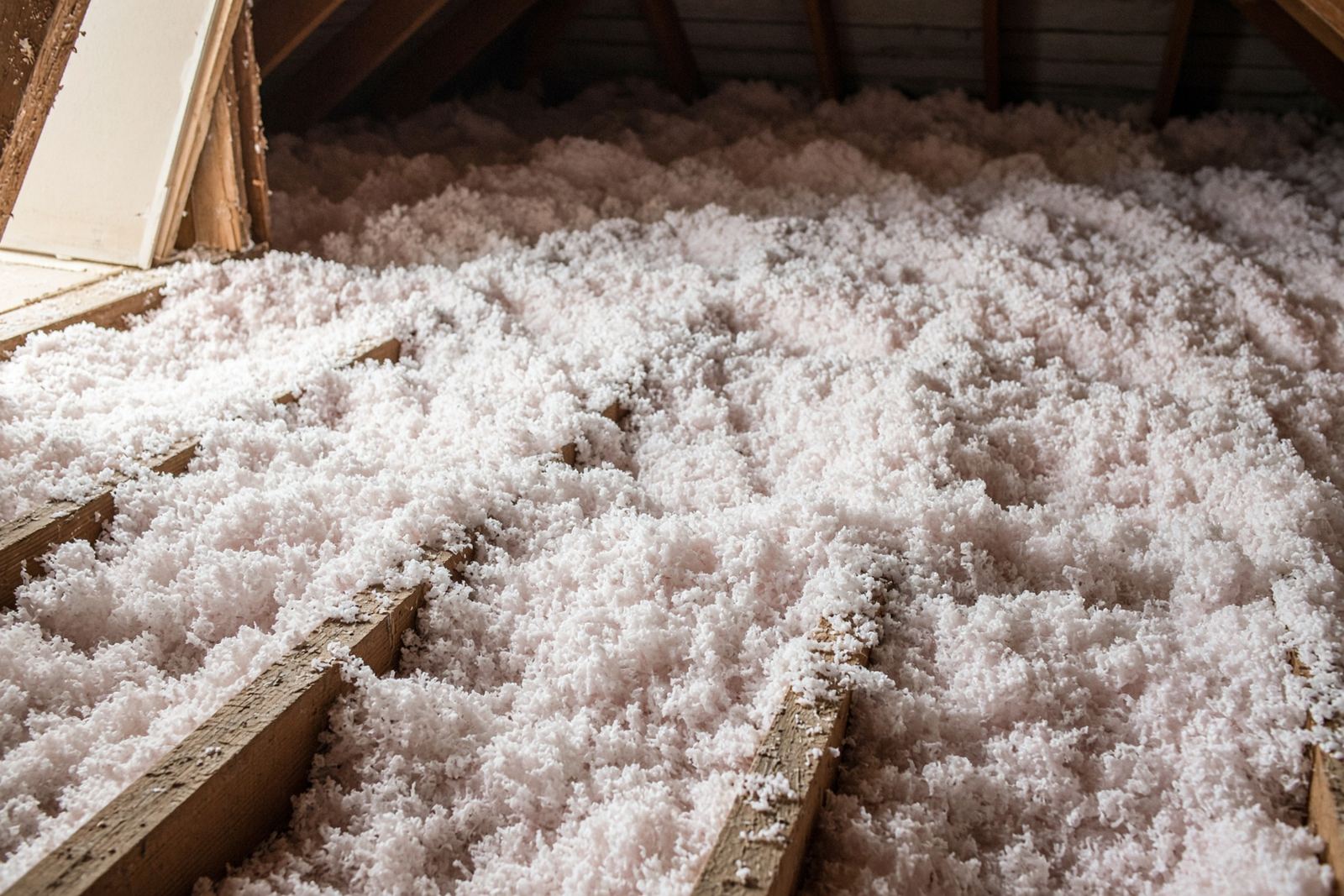
The blow has to stop before it closes the intake. Baffles, the chutes at the eaves, hold the fill back so the soffit stays a vent. They are part of a blown-in job on a vented attic. The depth at the eave is whatever the baffle allows. Stuffing that last foot to chase an R-number closes the vent and leaves the deck hotter and wetter after rain. You can see it from the hatch with a light. Daylight at the soffit means the intake is still there. Insulation packed into the slot means it is gone.
Vents close on purpose in one case. When a roof should be inside the house, spray foam goes on the deck and the vents over that roof are shut. That is an unvented assembly. It is the bonus room over the garage, or a hot roof, not the open attic beside it. Closing the ridge on a house that still has a vented attic floor, and then blowing the floor, traps the attic. One system. Not both on the same bay.
A bath fan that ends in the attic is not ventilation. It is a moisture machine pointed at the deck. The fan has to terminate outdoors, through a roof cap or a wall cap, before the new fill covers the hose. Leaving it buried is how a dry top-up turns into stained decking a year later.
What we check, and what you can check, is the path. Soffit open. Baffle in place. High vent actually open, not caulked shut and not sitting under a new roof with no hole cut. Fill level, not pushed into the eave. Hatch weatherstripped so the house is not the intake. The shop that does this is Cardinal Insulation, 4263 NW 1st Ave, Boca Raton, FL 33431. Blown-in insulation is the first service. Call (561) 654-7698. The shorter note on baffles alone is the soffit page. This one is the whole vent path.
Attic insulation · (561) 654-7698