Blown-in insulation in Boca Raton, neighborhood by neighborhood | Cardinal
Blown-in insulation is loose fiberglass or cellulose, installed with a hose across the floor of a vented attic. The attic stays hot. The insulation sits on the ceiling of the rooms below and slows the heat coming through that ceiling. It is not spray foam, and it is not a batt stuffed into a stud bay.
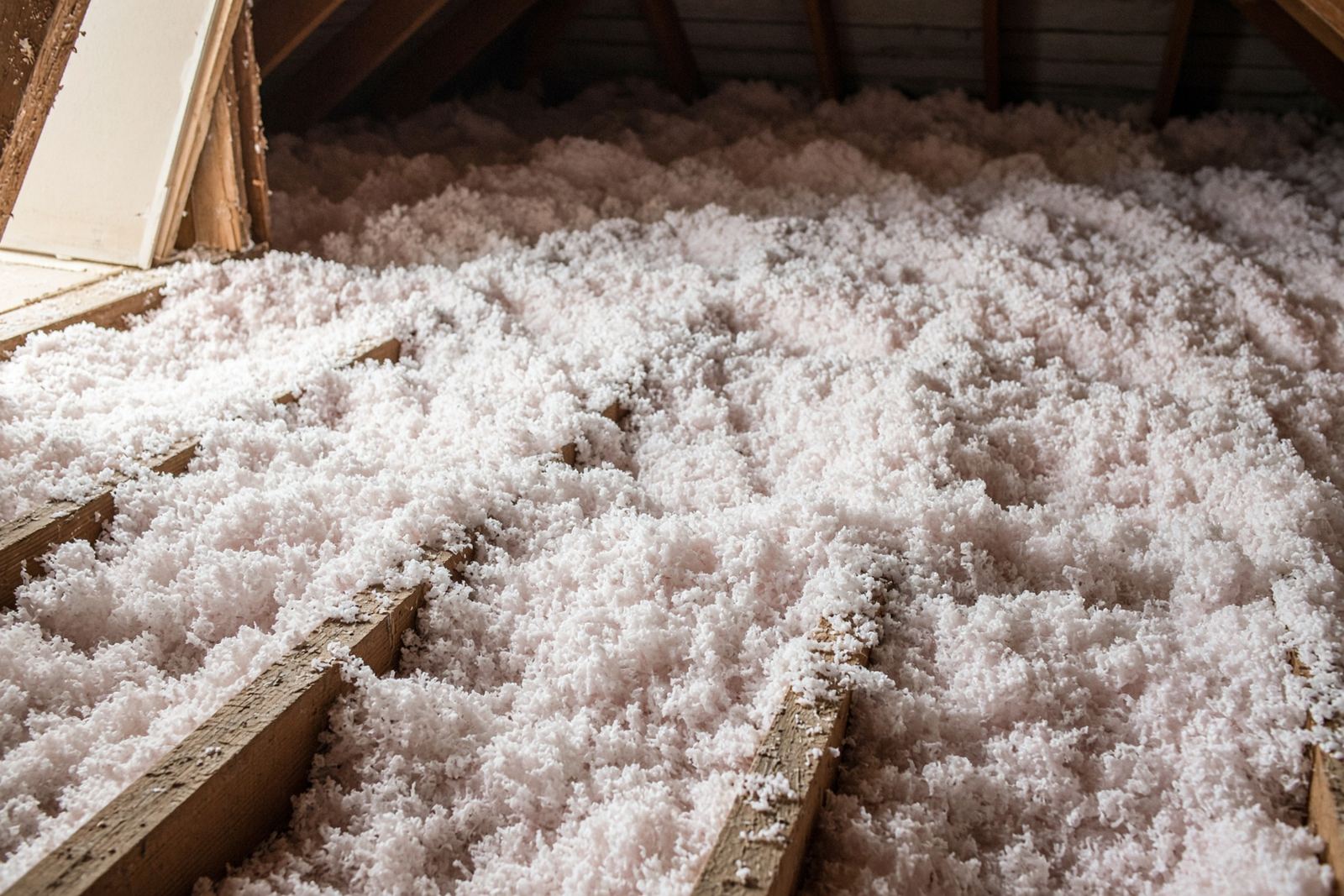
Boca Raton is not one attic. A closet hatch in 33432, a garage hatch downtown in 33431, a long truss run in Woodfield, and a 1970s ranch in Sandalfoot Cove are four different days. The product can be the same. The access, the existing fill, and the square footage are not.
The shop is 4263 NW 1st Ave, Boca Raton, FL 33431. That is the 33431 ZIP, west of the Intracoastal. Call (561) 654-7698. There is no second Boca pin for West Boca, and there is no pin on State Road 7.
What the hose is actually doing
Heat moves through the ceiling by conduction, and air moves through the holes by pressure. Loose fill slows the conduction. It does not stop the air. A gap at the top plate, an open can light, a bath fan that dumps into the attic, and a hatch with no weatherstrip still leak after the attic looks full.
That is why the sequence is the same in every Boca ZIP. Find the holes. Seal the ones that can be sealed from the attic. Baffle the soffits so the new fill does not choke the intake air. Then blow to an even depth. Depth is checked before the crew leaves, not guessed from the bag count.
Settled fiberglass already in the attic is figured at about R-2.2 per inch. Four inches is about R-9. Six inches is about R-13. New blown fiberglass is about R-2.5 per inch. New cellulose is about R-3.6 per inch and heavier. Cellulose goes in only if the ceiling can carry the weight. A plaster lid in east Boca often cannot.
The number on the bag is not the number on the house
Palm Beach County is climate zone 1A. The 2023 Florida residential energy code sets the ceiling floor at R-30 for that zone. R-30 is the minimum on a new house. It is not the depth Cardinal leaves. The blown-in standard here is R-38, checked with a depth mark.
From a bare ceiling, R-38 of new fiberglass is about 15 inches. Most Boca attics are not bare. If four inches of dry fiberglass are already there, about R-9, the gap to R-38 is about 11 to 12 inches of new fiberglass, installed level. Going past R-38 is more bags. It does not fix an unsealed hatch.
The attic also has to stay vented if the insulation is on the floor. Section R806.2 sets the net free vent area. Section R806.3 keeps a 1-inch space at the eave. The sections below do the math. Baffles protect that intake. Covering the soffit is not a way to get a higher R-value.
Table R402.1.2, the ceiling number
The code in force is the 2023 Florida Building Code, Eighth Edition. The Residential volume took effect December 31, 2023. Energy Conservation is a separate volume of the same edition. Palm Beach County is climate zone 1A. Boca Raton is not in the High-Velocity Hurricane Zone. That zone is Miami-Dade and Broward.
Table R402.1.2 of the Energy Conservation volume sets the climate zone 1 ceiling minimum at R-30. Zone 2 is R-38. Boca is zone 1, so the prescriptive floor is R-30, not the R-38 that zone 2 uses as its minimum. Cardinal still installs R-38 on a vented attic floor and checks the depth. Installing above the floor is not a different code. It is a thicker blow.
The same table allows a ceiling U-factor of 0.035. R-30 of continuous insulation is in that neighborhood. A proposal that prints R-30 does not meet the table if the edges are bare and the middle is a ridge of bags. The inspector, and the house, see the thin spot.
R-49 and R-60 show up when someone copies the unamended national model code for a colder climate and calls it Florida. They are not the Boca prescriptive ceiling. Quoting them does not make a Boca attic colder-climate work, and it does not change the bags.
How the R-value turns into inches
Settled fiberglass already in the attic is figured near R-2.2 per inch. New blown fiberglass is about R-2.5 per inch. New cellulose is about R-3.6 per inch, and it weighs more. A plaster lid in east Boca often cannot carry cellulose. Fiberglass is the usual top-up for that reason.
From a bare ceiling, R-30 of new fiberglass is about 12 inches. R-38 is about 15 inches. R-30 of cellulose is about 8.5 inches. R-38 of cellulose is about 10.5 inches. Those are even depths, not a pile at the hatch and a dusting at the eave.
Four inches of dry settled fiberglass is about R-9. The gap from R-9 to the R-30 code floor is about 8 to 9 inches of new fiberglass. The gap from R-9 to the R-38 install is about 11 to 12 inches. Six inches of settled fiberglass is about R-13. The gap to R-38 is then about 10 inches of new fiberglass. The crew measures what is there. The bag label from 1988 is not the measurement.
Going past R-38 is more bags. It does not close a hatch, and it does not replace the 1 inch of air that Section R806.3 requires at the soffit. Depth stops at the baffle. The extra inch of insulation is not worth a closed intake.
R806.2, the vent area
Section R806.2 of the 2023 Florida Building Code, Residential, sets the minimum net free ventilating area at 1/150 of the area of the vented space. Net free area is the opening that is actually open, after the screen and the louvers. It is the number stamped on the vent, not the size of the hole cut in the soffit.
The Florida exception allows 1/300 when both of these are true. Not less than 40 percent and not more than 50 percent of the required ventilating area is in the upper portion of the attic. Those upper vents sit not more than 3 feet below the ridge, measured vertically. The balance of the required area is in the bottom third of the attic. Where a rafter blocks that upper spot, the code allows the upper vent lower than 3 feet.
Take a common Boca attic of about 1,800 square feet, the size used on the planner for a mid-size house. At 1/150 that is 12 square feet of net free area. At 1/300 it is 6 square feet, and only if 2.4 to 3.0 square feet of that 6 is at the ridge and the rest is in the bottom third. A turbine with the soffits painted shut does not meet either number.
A West Boca club house with a larger ceiling, say 2,400 square feet, needs 16 square feet at 1/150, or 8 square feet at the 1/300 exception with the same 40 to 50 percent up high. A tight east-side cottage of about 1,200 square feet needs 8 square feet at 1/150, or 4 at the exception. The neighborhood changes the square footage. It does not change the fraction.
R806.3, the inch at the soffit
Section R806.3 says insulation shall not block the free flow of air where eave vents are installed. Not less than a 1-inch space is required between the insulation and the roof sheathing at the vent. That is the baffle. The blow stops there.
Barrel tile does not change this. Tile sheds rain. It is not the intake, and it is not insulation. The intake is the soffit or the eave vent under the tile. In 33432 the eave is often short, so the baffle has less room and the 1 inch is easier to lose. In Woodfield and Boca West the eave run is long, so a missed baffle shows up as a cold stripe along the outside wall, not as a thin spot you can see from the hatch.
A powered fan is not a substitute for that intake. R806 sizes area. It does not say a fan may replace the soffit. Closing the soffit and adding a fan is how an attic that met 1/150 stops meeting it.
Table R402.4.1.1, the air seal
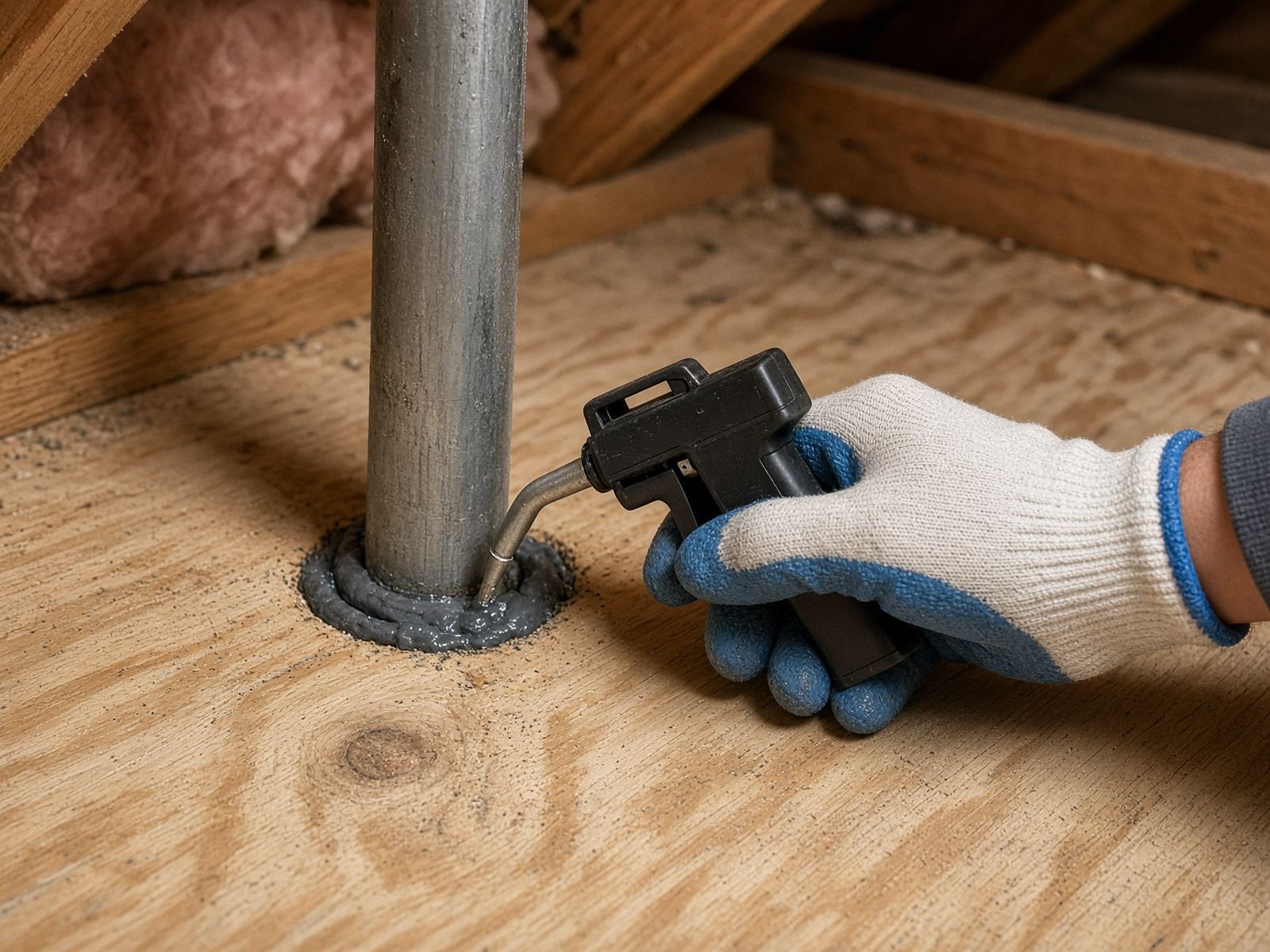
Table R402.4.1.1 says air-permeable insulation shall not be used as the air seal. Blown fiberglass and cellulose are air-permeable. They slow heat. They do not stop air. The top plates, the wire holes, the plumbing stacks, the cans that can be sealed, the bath fan housing, and the hatch are closed first. Then the hose runs.
A hatch with no weatherstrip is a hole the size of the opening. On a garage hatch in 33431 that hole is often larger than every can light in the house put together. Weatherstrip and a cover of rigid insulation on the back of the lid are the seal. Blowing over the lid and calling the attic done leaves the largest leak in the ceiling.
A bath fan that still dumps into the attic is the same class of hole, and it is wet. The duct has to terminate outdoors. New fill on top of that fan is how a top-up becomes a removal a year later. The code table is the reason, not a preference.
Non-IC can lights keep their clearance. Air-permeable fill does not bury them. An IC can that is rated to be covered can be. The label on the can decides it, not the depth mark for the rest of the attic.
The blower door, and what this job is not
Section R402.4.1.2 limits a new house in climate zones 1 and 2 to 7 air changes per hour at 50 pascals, tested to ANSI/RESNET/ICC 380. That test is a blower door. An insulation price is not that test. The number is reported only when the door is run.
Most of the attics in these ZIPs are existing houses. Adding insulation over dry fill is not the same scope as building the thermal envelope of a new house. The 7-air-change limit is not a number Cardinal prints on a top-up. Russell Y is certified to run a blower door. The test is a separate visit, and the result is the number the gauge reads.
On the city's private-provider inspection list, the insulation lines are 200, Insulation, and 2050, Insulation Certificate. Energy is 222, Energy Compliance Check. Those are for permitted work. A dry top-up in an existing house is not automatically the same inspection as a new ceiling. The Building Department answers that for the permit. This company does not. The department is at 200 NW 2nd Avenue, (561) 393-7930. That is not the shop.
Hurricane zone, and what it does not change
Boca Raton is in Palm Beach County. Palm Beach County is not the High-Velocity Hurricane Zone. HVHZ is Miami-Dade and Broward. The wind rules in HVHZ govern product approval for roofs and openings. They do not raise the attic-floor R-value. Table R402.1.2 is still R-30 in climate zone 1 on both sides of the county line.
A house in 33428 is Palm Beach. The next community west, Heron Bay in 33076, is Broward, so the roofing and opening rules change at that line. The ceiling minimum does not. Both are zone 1. Both get the same blown-in standard when the attic is vented: seal, baffle, R-38.
A tile roof that meets a wind rating is still a hot attic if the ceiling under it is vented. Wind resistance and R-value are different chapters. Replacing tile does not insulate the rooms. Blowing the floor does not reroof the house.
33431, the shop ZIP
33431 is downtown west of the Intracoastal. Older blocks, barrel tile, and hatches that are often in the garage. The shop at 4263 NW 1st Ave sits in this ZIP. The houses are closer to the pin than anything in West Boca, and the attics are usually tighter than a club house off Glades.
A dry batt from the 1970s or 1980s stays. It is sealed at the top plates and the hatch, then topped to R-38. It comes out only when it is wet from a roof leak, stained with mold, or packed with droppings and nesting. Blowing new insulation over that hides the problem against the ceiling.
A near-me search typed on these blocks starts nearer the shop than a search typed at State Road 7. The page does not pretend those two searches are the same distance.
33432 and the east side
33432 is the beach side. Mizner Park, Royal Palm, and the smaller lots toward the water. Hatches are tighter. Some are closet scuttles. Bags and a hose have to fit that opening. If they will not, the job is not forced through a ceiling.
Royal Palm Yacht and Country Club is deep-water lots and custom houses. The attic is still a vented ceiling if the roof was built that way. East-side hatches take longer than a West Boca garage hatch. The R-38 target does not change because the lot is on the water.
Golden Harbour, Boca Bath and Tennis, and the older beach blocks show the same pattern: barrel tile, a short attic, and original fill that has slumped. Dusty and thin is a top-up. Soft plaster under a soaked batt is a stop, not a reason to put a knee through a bedroom ceiling.
The short eave is the code problem on this side of town. R806.3 still wants 1 inch between the insulation and the roof sheathing at the vent. There is less room to get it. A baffle that is skipped here closes the intake on the first foot, not twenty feet back. Cellulose is usually the wrong call on the plaster lids. The weight is the reason. Fiberglass is the top-up.
33486 and 33487, toward Delray
33486 and 33487 are the north end of Boca, toward the Delray line. Boca Teeca, Camino Gardens, and the streets that share a border with 33446 need the ZIP on the tax bill. A Delray address is not a Boca attic, and the other way around.
These attics are often the older single-story house: tile, a garage hatch, and batts that have pulled off the plates. The work is still the seal, the baffles, then the blow. A house that is actually in Delray is covered from the walk-in at 955 S Congress Ave, same phone, (561) 654-7698.
Bocaire sits near that line. Custom houses, tile roofs, a gate. The crew's names go to the guard. The crew does not keep a code, and the job is not priced as if the gate were a shop.
33434, Military Trail and the other Woodfield
33434 runs along Military Trail. Century Village is a large part of this ZIP, and a large part of Century Village is condominiums. A unit with no attic is not booked as a blow. A villa with a vented ceiling is.
Woodfield Hunt Club is the other Woodfield, and it is easy to mix up with the country club. Hunt Club is on Jog Road between Yamato and Clint Moore, ZIP 33434. It is not inside Woodfield Country Club. Club membership is not required. The houses are 1980s, on larger lots, with original batts that have usually settled.
Broken Sound and St. Andrews are the northwest clubs people name in the same breath. Estate houses, large attics, tile. The square footage is why the bid is higher than a downtown cottage. The shop is still 4263 NW 1st Ave.
33433, Town Center and Boca Del Mar
33433 is west of I-95: Town Center, Boca Del Mar, and the 1970s and 1980s houses whose fill has settled. The attics are wider than the beach side and older than the far-west clubs. Original batts slumped off the plates are the usual find.
Boca Pointe is the gated golf community in this part of the city. A bonus room over the garage is a foam job, and only if the vents over that room are closed. The open attic under the tile stays blown-in. Those are two prices on one roof.
Whisper Walk, Boca Square, and the streets around the mall follow the same rule. Dry fill stays. The edges, where the soffit air has washed the old fill thin, get baffles before any new material goes down.
33496, the club side
33496 is west of Jog, off Yamato and Glades. Woodfield Country Club and The Hamptons are here. The Hamptons gate is inside the club. The crew does not have a code. The names go to the guard the morning of the job.
These houses are mostly one story under tile, built from the late 1980s on. The attics are wide. Original batts have often slumped to something near R-9. That is a seal and a top-up, not a tear-out, if the fill is dry. The walk from the hatch to the far eave is long, so the depth at the air handler has to match the depth at the hatch.
Boca West is the largest club in West Boca. It has condos, villas, and houses. A condo with no scuttle is not this job. A house attic is. Boca Grove is the same idea closer to the middle of the city: tile, settled fill, a gate. The pin does not move to the clubhouse.
33498 and 33428, out to State Road 7
33498 is farther west, including parts of Mission Bay at Glades and State Road 7, and the wider sections past the turnpike. Ten sections in a community means one attic does not describe the next. The hose run is longer. The R-38 number is the same.
33428 is west of State Road 7. Sandalfoot Cove is early-1970s ranches. The garage hatch is also a large hole, which makes the bags easier and the ceiling around the hatch easier to damage. Boca Falls sits between Glades and Palmetto Park, two gates. Boca Woods is the country club on the west side of State Road 7, between Glades and Palmetto Park.
This is the Boca side of the Parkland line. Heron Bay and Parkland Golf and Country Club are the next communities, in 33076, which is Broward, not 33428. A near-me search typed on either side of State Road 7 starts about twelve miles from 4263 NW 1st Ave. This note names the attics. It does not add a pin on the county line.
The county line is also the hurricane-zone line. 33428 is Palm Beach, so it is not HVHZ. 33076 is Broward, so the roofing and opening product-approval rules change. The ceiling does not. Both counties are climate zone 1. Table R402.1.2 is still R-30. The install is still R-38 on a vented floor, with the soffit kept open.
The attic is outside the house
A vented attic is not a room. The soffit lets outside air in. The ridge or the turbines let it out. The air above the insulation is outdoor air that happens to be under a roof. The house stops at the ceiling. That is why the insulation belongs on the floor of the attic, on the warm side of the rooms, and not stuffed against the tile.
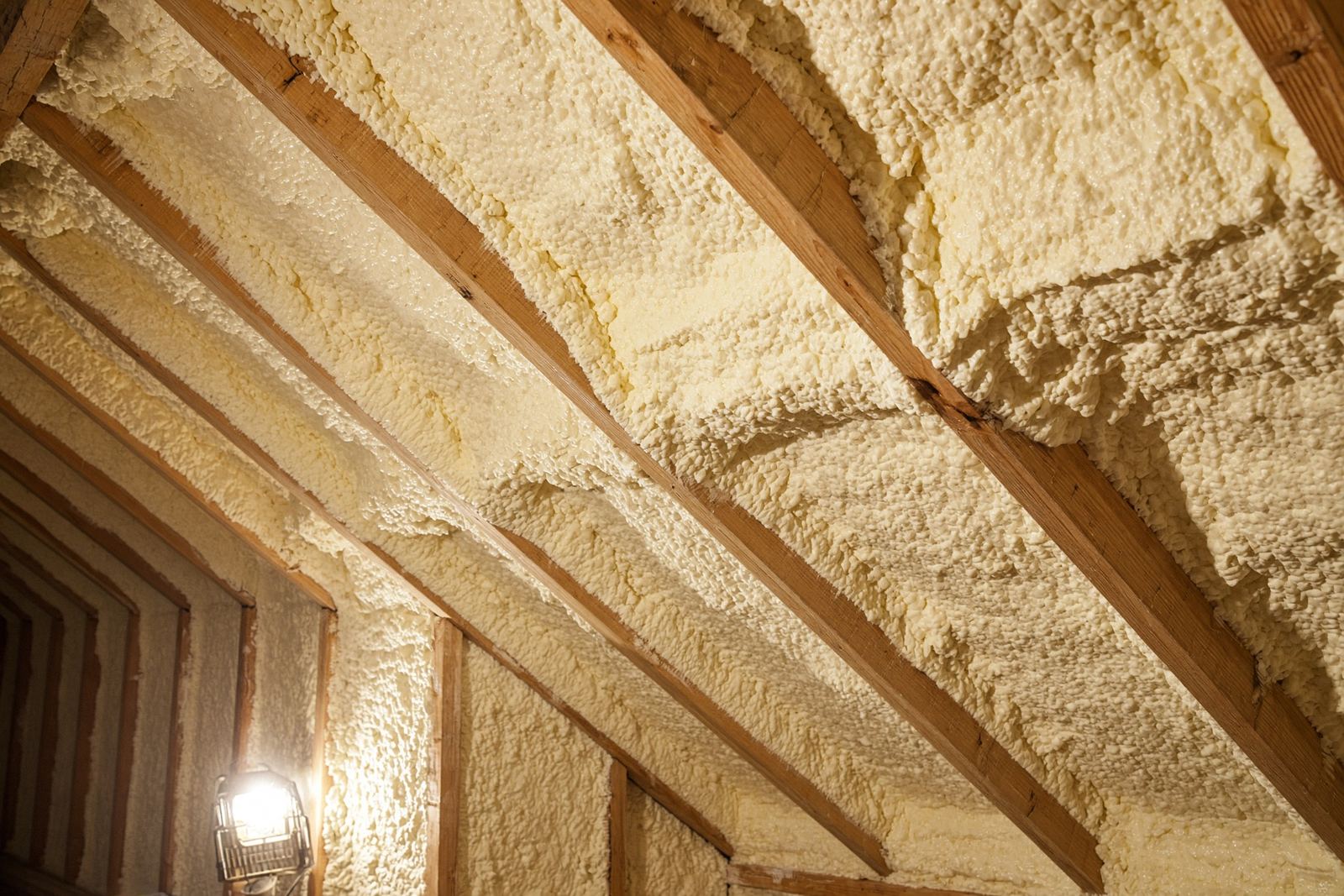
Once that is clear, a lot of bad advice falls apart. Painting the tile white does not insulate the bedroom. A turbine does not replace the ceiling. Spray foam on a roof deck is a different idea: it moves the boundary up to the roof, closes the vents, and makes the attic part of the house. That is a roof job. It is not a blow across the floor, and it is the wrong assembly if the soffits are supposed to stay open.
Boca houses were almost all built the first way. Tile, a vented hip, trusses, and a flat ceiling. The clubs in 33496 and the ranches in Sandalfoot Cove share that drawing even when the square footage does not. The lesson is the same in both. Find the ceiling. Seal it. Cover it evenly. Leave the attic hot.
Three ways heat crosses the ceiling
Heat crosses a ceiling three ways, and a hose only slows one of them. Conduction is heat moving through the drywall, the truss, and the fill itself. More inches slow that path. That is the R-value. Convection is air moving through holes, carrying heat and humidity with it. Loose fill does not stop convection. The seal does. Radiation is heat jumping from the hot roof deck down onto the top of the insulation. A vented air space and, where one was installed, a radiant barrier slow that path. Insulation is not a radiant barrier, and a radiant barrier is not an R-value.
In July the roof deck over a Boca house is the hot object. The bedrooms are the cool object. Heat flows from the deck toward the rooms all afternoon. The attic air sits in between, often hotter than the yard, because the deck is radiating into a low space and the tile has been in the sun since morning. The ceiling is the only plane you can thicken without rebuilding the roof.
Winter is the small load here. Climate zone 1A is defined by the summer. A house that is comfortable in January and miserable in August does not have a heating problem. It has a ceiling that is thin, leaky at the plates, or wind-washed at the eaves. Adding R-value for a northern winter chart misses the month that actually hurts.
Trusses are a conduction bridge the blow does not erase. Wood conducts better than fiberglass. The bottom chord of the truss sits in the ceiling. Covering it is worth doing. Pretending the R-38 between the trusses is the R-38 of the whole ceiling is not. The even depth still matters more than a perfect laboratory number, because the bare spots and the holes move more heat than the wood does.
Tile, the deck, and a radiant barrier
Barrel tile and flat tile are the Boca roof. They shed water. They are heavy. They are not insulation. A tile roof over an open batten has a little air under the tile, and that air still gets hot. The deck under it is what the attic sees. If the deck is bare plywood or plank, it radiates straight down.
Some newer West Boca roofs, and some reroofs, have a radiant barrier stapled to the deck or a foil facing on the sheathing. That foil cuts the radiant transfer. It does not add R-30. A house with a shiny deck and two inches of fiberglass is still a thin ceiling. The barrier is a help. It is not the job.
An older downtown roof in 33431 usually has no foil at all. The deck is dark wood, the tile is original, and the fill is a batt that has fallen off the plate. The blow does not require a reroof first. It does require that the deck is dry. A dark stain on the plywood is a roof leak until a roofer says it is not. Insulation over a wet deck traps the water against the wood.
Wind washing, the thin stripe at the wall
Soffit air is supposed to travel along the underside of the roof and out the top. When there is no baffle, that air blows through the insulation at the eave instead of over it. The fill at the outside wall gets pushed back, or it was never there. The middle of the attic can look full while the first two feet, right over the exterior wall, are bare. That stripe is the warm band homeowners feel on the outside bedrooms.
This shows up in every ZIP, for different reasons. In 33432 the eave is short, so the whole stripe is within arm's reach of the plate and still gets skipped. In Woodfield, The Hamptons, and Boca West the eave is a long walk from the hatch. The original crew stopped where the bags ran out. The bedrooms on the outside of the plan are the ones under that gap.
The baffle is a channel, usually foam or cardboard, that holds the 1 inch R806.3 requires and gives the new fill a wall to stop against. Without it, blowing deeper just feeds more insulation into the soffit. The intake closes. The stripe comes back. Depth at the hatch is not depth at the plate, and the plate is the spot that faces the sun on the west wall in the afternoon.
Ducts and the air handler
In a vented Boca attic the ducts are outside the house. They sit in the hot air above the insulation. A leaky supply duct dumps cold air into the attic. A leaky return pulls attic air into the system. Blowing insulation around the ducts does not seal them. It can hide a disconnected boot until the room under it never cools.
The air handler platform is the other trap. The platform is often a wood box with no lid, or a lid that was never gasketed, sitting over a closet or a garage. That opening is a hole in the ceiling the size of the cabinet. It gets sealed or covered before any fill goes down around it. Burying an open platform is how a return starts pulling from the attic.
Ducts need to stay clear enough to be seen. The blow goes under them and between them to the depth mark. It does not bury a flex line so deeply that a tech cannot find a joint. Where a duct lies on the ceiling, the insulation cannot be R-38 under that duct. The note on the job says so. Pretending the ruler in the open bay is also the ruler under the trunk line is how a bid and an attic stop matching.
None of this is a promise about the power bill. A tighter ceiling and a sealed boot usually let the same air conditioner run less in the afternoon. How much depends on the ducts, the windows, and the thermostat. The insulation visit does not measure the bill. It measures inches.
Knee walls, trays, and the garage lid
A bonus room over a garage is a knee-wall problem wearing a nicer name. The sloped ceiling of that room is often the roof deck, or it is a short rafter bay with a batt stuffed in it. The floor of the open attic stops at the knee wall. If the knee wall is bare, the room leaks sideways into the attic no matter how deep the open floor is. The knee wall gets a sealed backing and a batt or a blow of its own. Foam is the other choice, and only if the vents over that room are closed so the roof deck is inside the house.
Two inches of closed-cell foam is about R-13. It is an air seal on the deck. It is not an R-38 attic, and it is not a substitute for the open hip roof over the rest of the house. Boca Pointe and the newer sections of Mission Bay are where this split shows up. One roof, two prices, two assemblies. Selling foam for the whole vented attic because one room is a bonus is the expensive version of the mistake.
A tray ceiling is a well in the attic. The insulation has to follow the well down, not bridge across the top of it and leave the tray lid bare. From the hatch the attic looks flat. From the dining room the tray is the cold-feeling spot in August, which in this climate means the warm spot. The crew has to get into the well. If the well is too tight to enter, that is said out loud. It is not filled from a distance and called R-38.
The garage lid matters when a bedroom or a bonus room sits over the garage, and it matters when the garage ceiling is the floor of the attic and the house air leaks into the garage through the same top plates. An unconditioned garage is outside. The lid over it gets the same seal and the same depth as the living-room lid if that lid is the attic floor. A garage that is open to the attic through a missing lid is not a storage note. It is a hole.
Fiberglass, cellulose, and the chart on the bag
The R-value on a blown-in chart is not a property of the fiber alone. It is the R-value at a stated thickness and a stated weight per square foot. Blow it fluffier than the chart and the inches look right while the weight is short. Pack it denser and the inches drop. The coverage number on the bag is the check. Square feet on the plan, divided by the coverage at R-38, is the bag count before anyone corrects for the fill that is already there.
That count is a plan, not a promise. Existing dry fill changes it. A 4-inch fiberglass layer that stays means you are not blowing 15 inches. You are blowing the gap, about 11 to 12 inches of new fiberglass, and the bag count drops with it. A bare spot at the eave is extra, not average. The depth marks, stuck in the bays before the hose starts, are what the crew blows to. The empty bags are the receipt.
Fiberglass is the default on a Boca top-up because it is light. Cellulose resists air movement a little better at the same depth and gives more R per inch, about R-3.6 against about R-2.5. It also weighs enough to crack a plaster ceiling if the ceiling was never meant to carry it. East Boca plaster, the 33432 and 33431 lids, is where that choice gets made against the ceiling, not against a brochure. If the lid is drywall and the framing is sound, cellulose is a real option. If the lid is plaster, it usually is not.
Batts that are already in the attic are not trash. A dry batt that is still in contact with the ceiling is R-value you do not have to buy again. A batt that has fallen onto a wire, or pulled off the plate, is counted at whatever thickness is actually touching the lid. Facing paper toward the ceiling is the old install. It stays. Peeling every facing off to satisfy a theory is not the job.
What the hatch shows, and what it hides
The first three feet around a hatch are the best-insulated square feet in a lot of Boca attics, because that is where the original bags were emptied. The far eave, the tray well, and the bay under the air handler are where the work was skipped. A photo of the hatch is useful. It is not the attic.
A useful set of photos is four pictures. The hatch opening, so the bags can be judged against it. A wide shot of the fill, with a tape on it. The soffit, so the baffle question is visible. Any stain on the deck or the ceiling below. That is enough to tell a top-up from a removal before a truck is booked. It is not enough to skip the visit when the photos disagree with each other.
Walking the attic is part of the work, and it is the part that damages a ceiling if it is done badly. The crew stays on the truss chords. A foot between the chords is a foot through the drywall. Sandalfoot Cove and the older 33433 ranches have garage hatches that make the entry easy and the lid around the hatch easy to crack. The repair for a foot through the ceiling is not included in a top-up, and it is not hidden with a bag of fiberglass.
Summer is the season this climate is built for
Zone 1A is hot and humid. The outdoor air that enters a soffit in August is not dry. It carries moisture. That is another reason the bath fan cannot dump into the attic, and another reason a wet deck is not buried. The ventilation in R806 is there to keep that moisture moving out. Closing it to 'hold the cool in' holds the moisture against the deck instead.
The afternoon is the test. West-facing bedrooms in a club house, and the rooms under a low hip in a one-story ranch, are the rooms that overheat first. They sit under the most deck and the most sun. If those rooms are the complaint, the eave on that side is the first place to look, not the thermostat.
A new air conditioner under a thin ceiling is a larger machine fighting the same hole. The ceiling is the cheaper fix when the fill is at R-9 and the plates are open. It is not a substitute for a system that is already broken. Cardinal does not sell the air conditioner. The bid says what the attic is, and stops there.
The order of one job
The visit starts at the hatch, not at the truck. Measure the opening. If a scuttle in 33432 will not take the hose and a person, the job is replanned or declined. If the garage hatch in 33431 or Sandalfoot will, the floor around it gets protected before a bag comes in.
Then the deck. Dry and sound, the work continues. Wet, stained, or soft, it stops until the roof or the ceiling is owned by the trade that fixes it. Droppings and tunnels stop it too. A pest company gets the animals out. Cardinal does not claim that license.
Then the holes. Top plates, wires, the open platform, the fan that does not go outdoors, the hatch lid. Cans that are not rated to be covered stay clear. Baffles go in at every soffit bay that will take one, with the 1 inch of R806.3 left open.
Then the marks. A ruler in the open bays, at the height the chart calls for once the existing dry fill is counted. The hose starts at the far eave and comes back to the hatch, so the crew is not trapped behind the fill. The depth at the far wall has to match the depth at the hatch. The bags are counted. The hatch lid is sealed last, because it is the way out.
That order does not change because the gate is at The Hamptons or the house is a block from 4263 NW 1st Ave. The gate changes the morning. The ZIP changes the hatch and the square footage. The code and the sequence stay.
What stays, and what has to come out
Dry, thin, dusty fill stays in every one of these neighborhoods. Four inches of dry fiberglass is a top-up. Tearing it out to sell a bigger ticket is not the job. The removal page is for fill that is wet, moldy, or full of nests.
A roof leak that soaked one bay does not automatically condemn the whole attic. The hatch gets opened, and the wet part is named. If the lid under that bay is already soft, the insulation stops until a roofer or a drywall contractor owns the repair.
Rodent droppings and tunnels mean the fill comes out. Blowing over a nest traps the mess against the ceiling. A pest company gets the animals out. Cardinal does not claim that license. Sanitizing, if the deck needs it, is a separate price after the bad fill is gone, and it is not mold remediation for the rooms downstairs.
The mistakes that show up in every ZIP
The first mistake is burying a bath fan that still dumps into the attic. The fan has to terminate outdoors. New fill on top of that fan is how a top-up becomes a removal a year later.
The second is covering a non-IC can light. Those cans keep their clearance. They are not a reason to remove the whole attic, and they are not a reason to pretend the blow can touch the can.
The third is treating a bonus room as if it were the open attic. Foam on a roof deck, with the vents over that room closed, is a different assembly. Two inches of closed-cell foam is about R-13. It is an air-seal coat, not an R-38 attic. The vented hip roof over the rest of the house still wants blown-in on the floor.
How to use this when you call
Say the ZIP and the neighborhood. 33432 is not 33496, and Woodfield Hunt Club is not Woodfield Country Club. A photo of the hatch, a wide shot of the fill, and any stain on the ceiling is enough to say whether the first visit is a top-up or a removal.
A planning range for an attic of about 1,800 square feet with about 4 inches of settled fiberglass, brought to R-38 in blown fiberglass, is about $2,100 to $3,350. A tight east-side hatch, a long West Boca run, removal, and foam move that number. It is a range, not a bid. The bid is the attic someone has seen.
The shop is Cardinal Insulation, 4263 NW 1st Ave, Boca Raton, FL 33431. Blown-in insulation is the first service. Call (561) 654-7698.
Blown-in insulation · (561) 654-7698