Where a Delray Beach ceiling leaks air | Cardinal
The air that makes a Delray Beach bedroom hard to cool is usually leaving through the ceiling, not through the tile. The leaks are ordinary: the top of the wall, the wire holes, a can that was never rated to be buried, a hatch with no weatherstrip, and a bath fan that ends in the attic. Another inch of fiberglass on those holes does not close them.
The shop is 955 S Congress Ave, Delray Beach, FL 33445. Customers can walk in. Call (561) 654-7698. The seal is the first hour of a blown-in job. Quotes are prepared by Russell Y, a building scientist who is BPI certified and certified to perform blower door testing.
The blanket does not stop the air
Insulation slows heat moving through the material. Air moving through a gap goes around it. The air leaving a cooled Delray house is moist. It hits a roof deck that is hot by noon, under tile that shades the shingles and does not insulate the rooms. Sealing the ceiling cuts that path. Selling R-49 on top of an open top plate, which is a colder-climate number, does not.
Palm Beach County is climate zone 1A. The ceiling floor is R-30. We install R-38 after the holes we can reach are closed. A blower-door result, including zone 1's 7 air changes per hour, is a test of the whole house. Russell Y is certified to run it. The number is reported only when the test is run. The seal on an existing Delray ceiling is not that test.
East Delray: the plate you can barely reach
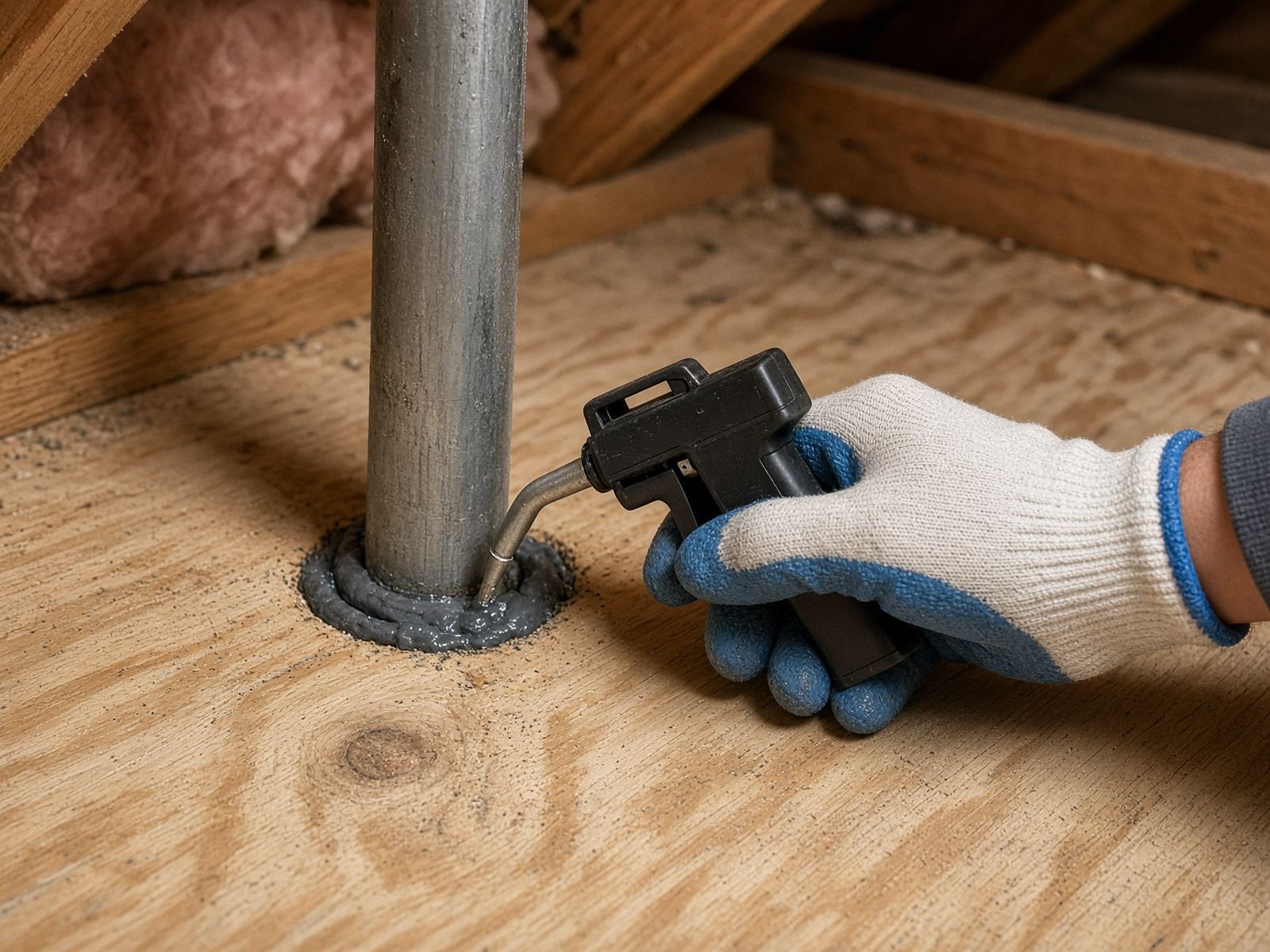
In Pineapple Grove, Lake Ida, and Tropic Isle the top plate is close to the roof. The drywall often stops short of it, and the gap can run the length of a bedroom. Wire holes and a plumbing stack through the same plate are the same leak in a smaller shape. They get sealed before the blow. Once the fill covers them, the hour is over. A closet hatch does not make the leak smaller. It makes the hour slower.
An open chase over a shower, or a dropped soffit in an older kitchen, is large enough to see. That is a hole, not a thin spot in the insulation. Plaster that is already soft stops the day. We do not stand on it to reach a bay, and we do not blow cellulose onto a lid that cannot carry the weight. New cellulose is about R-3.6 per inch and heavier. Fiberglass, about R-2.5 per inch new, is the usual product here.
West Delray: the villa hatch and the fan
Kings Point, the Villages of Oriole, Delray Villas, and The Hamlet have more ceiling and the same leaks. The hatch or the pull-down stairs in a villa is a hole in the ceiling every hour the air conditioner runs. Weatherstrip and a cover are part of the job. A bare plywood door is not finished work.
Bath fans in these 1970s and 1980s buildings often end in the attic, or the duct has fallen off the housing. Shower moisture then sits under the roof. The duct has to leave the building. A hose full of fiberglass is not a duct. Recessed cans that are not rated for insulation contact need clearance or a listed cover. Burying one to make the depth look even is how a fire starts. The rating is on the can.
A condominium tower in Kings Point has no attic floor to seal. Do not buy an air-seal-and-blow for a building with no scuttle. A villa with a vented ceiling is the job. Say which one.
What we do not seal on purpose
We do not plug the soffit to tighten the attic. Section R806.3 requires at least a 1-inch space at the eave. Closing it on a vented roof is the wrong kind of tight. If a low addition should sit inside the house, the vents over that roof are closed on purpose and the product is foam on the deck. The open attic over the original ceiling stays blown-in. Two inches of closed-cell foam is about R-13. It is not an attic-floor R-38.
We do not seal ducts and call it the ceiling. A leaky supply duct wastes cooled air above the insulation. That is a different trade. We also do not encapsulate a crawl space or insulate a garage door and tell you the bedroom was done.
What you can check
Ask to look before the fill goes down. You should see the plates and the wire holes closed, covers on the cans that need them, a weatherstripped hatch, and baffles still open at the eaves. After the blow, depth markers face the hatch, at least one every 300 square feet. An even field with the soffit open is the finished job.
The shop is 955 S Congress Ave, Delray Beach, FL 33445. Call (561) 654-7698. Customers can walk in. How to read the east side versus the west side is at https://cardinalinsulation.com/blog/how-to-read-a-delray-beach-attic. A planning range for an 1,800 square foot top-up, about 4 inches of settled fiberglass to R-38, is about $2,100 to $3,350. Removal and foam are separate. The range is not a bid.
Questions on removal, attic insulation, and blown-in
Does blown-in insulation seal a Delray ceiling?
No. It covers the ceiling after the leaks are closed. The top plate, the cans, the hatch, and a bath fan that ends in the attic still leak until they are sealed.
Who does the Delray air seal?
It is the first hour of the blown-in job, not a second company. Quotes are prepared by Russell Y, BPI certified, and certified to perform blower door testing. The test is separate and is reported only when it is run.
Should Delray soffit vents be covered?
No. The eaves stay open, with at least a 1-inch space. Covering them to chase a higher R-value closes the attic.
Where is the shop?
955 S Congress Ave, Delray Beach, FL 33445. Customers can walk in. Call (561) 654-7698.