Insulation removal, attic insulation, and blown-in insulation in Boca Raton | Cardinal
Insulation removal, attic insulation, and blown-in insulation are three different jobs that get sold as one sentence. In a Boca Raton house they are a sequence. The old fill either stays or it comes out. The ceiling is sealed. Then loose fiberglass or cellulose is blown across the attic floor to an even R-38. Spray foam is not in that sequence unless the roof deck is supposed to be inside the house.
The shop is 4263 NW 1st Ave, Boca Raton, FL 33431. Call (561) 654-7698. There is no West Boca pin and no pin on State Road 7. A house in Woodfield and a house off Palmetto Park Road are the same listing. They are not the same attic.
This note is the decision, not a bid. A planning range on the homepage is for a top-up. Removal, sanitizing, and foam are separate prices. Nothing here is a promise about the power bill.
Three prices, because they are three jobs
A dry attic with four inches of settled fiberglass is a seal and a top-up. A soaked batt, mold growing on the insulation, or a mat of rodent nesting is a removal first. Sanitizing, if the deck needs it after the bad fill is gone, is its own price. The new blow is a third price. Folding those into one number is how a homeowner pays for work that was never done, or how a crew skips the step that made the attic fail.
Tearing out dry fill to sell a bigger ticket is not the job. Four inches of dry fiberglass, figured at about R-2.2 per inch, is about R-9. That layer still works. It is short of the code floor and short of what we leave, and it stays under the new blow. Century Village and other buildings with no scuttle are not booked as a removal or as a blow. There is no attic to do.
The pages that go with this note are the blown-in page at https://cardinalinsulation.com/blown-in-insulation-boca-raton, the attic page at https://cardinalinsulation.com/attic-insulation, and the removal page at https://cardinalinsulation.com/insulation-removal/boca-raton.
What attic insulation is doing
Attic insulation on a vented house is a blanket on the ceiling of the rooms, not a coat on the roof. The attic stays hot. Barrel tile sheds rain. It is not insulation, and it is not the intake air. Heat still moves through the gypsum by conduction. Air still moves through the holes by pressure. The blanket slows the conduction. The seal stops the air. One without the other is half a job.
That is why a thick attic can still have a hot bedroom. The hatch is open to the attic, a bath fan dumps into the attic instead of outdoors, a can light is a hole, and the top plates over the outside walls were never sealed. Blowing more insulation over those holes hides them. It does not close them.
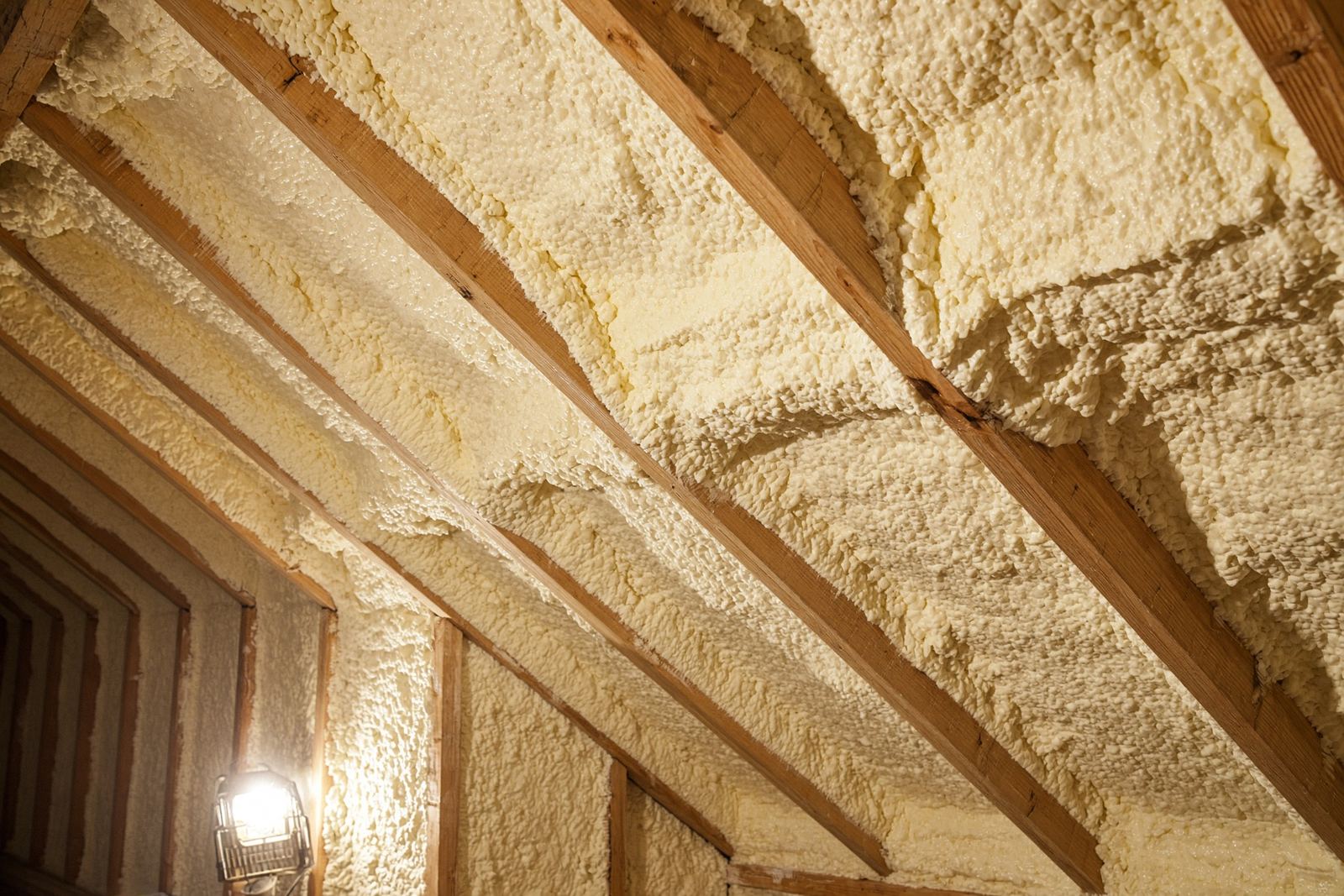
A bonus room over a garage is not this assembly. That room has a roof deck and a knee wall. Loose fill on the floor of a vented attic next to it is still a blow. The bonus room, if it should be inside the house, is spray foam, and only after its vents are closed. Mixing the two on one invoice is how the wrong product ends up in the wrong place.
When the old insulation comes out
The fill comes out when a roof leak has soaked it, when mold is growing on the insulation itself, or when droppings and nesting are packed into it. East Boca, 33432 and the shop ZIP 33431, is where a wet plaster lid shows up under a thin original layer. West of I-95, 33433, 33496, and 33498, the usual ruined layer is a wide batt that a later leak turned into a mat. The rule is the same. The hatch is not.
Wet fiberglass collapses. The air pockets that make the R-value are gone, and the mat holds water against the ceiling. Wet cellulose is worse. It was already dense, and once it takes on water it stains the lid and stays heavy. Drying a soaked cellulose attic in place and blowing over it is how the ceiling fails a year later. The roof leak is fixed before either product goes back down. We do not bag insulation and leave a hole over a bedroom.
Rodent nesting is not a top-up either. New fill on top of tunnels holds the mess against the drywall. After the contaminated layer is vacuumed out, sanitizing is a separate price if the deck needs it. Sanitizing the attic deck is not mold remediation for the rooms below, and it is not a license to call the house clear. If the lid is soft, a drywall contractor owns that repair before anyone walks the bay.
How a removal day actually goes
The bags or the vacuum hose have to fit the hatch they will leave through. An east Boca garage hatch under a short eave is a tight hole. A Sandalfoot garage hatch is a large hole, which makes the bags easier and the ceiling around it easier to damage. If the hatch cannot pass a bag, we say so before the truck is loaded, not after the attic is half empty.
Plaster under a soaked batt is fragile. The crew does not walk the joists and hope the lid holds. A low east-side attic is a crawl. A West Boca club attic is a long walk, and the path is the one that was agreed. Gate communities do not come with a code we already have. The names go to the guard the morning of the job.
When the vacuum stops, the deck should be visible. That is the point of the removal. The top plates, the wire holes, the plumbing stacks, and the bath-fan housing can finally be seen and sealed. Burying those and calling the attic done is the mistake the removal was supposed to prevent.
The seal is the attic insulation that the hose cannot do
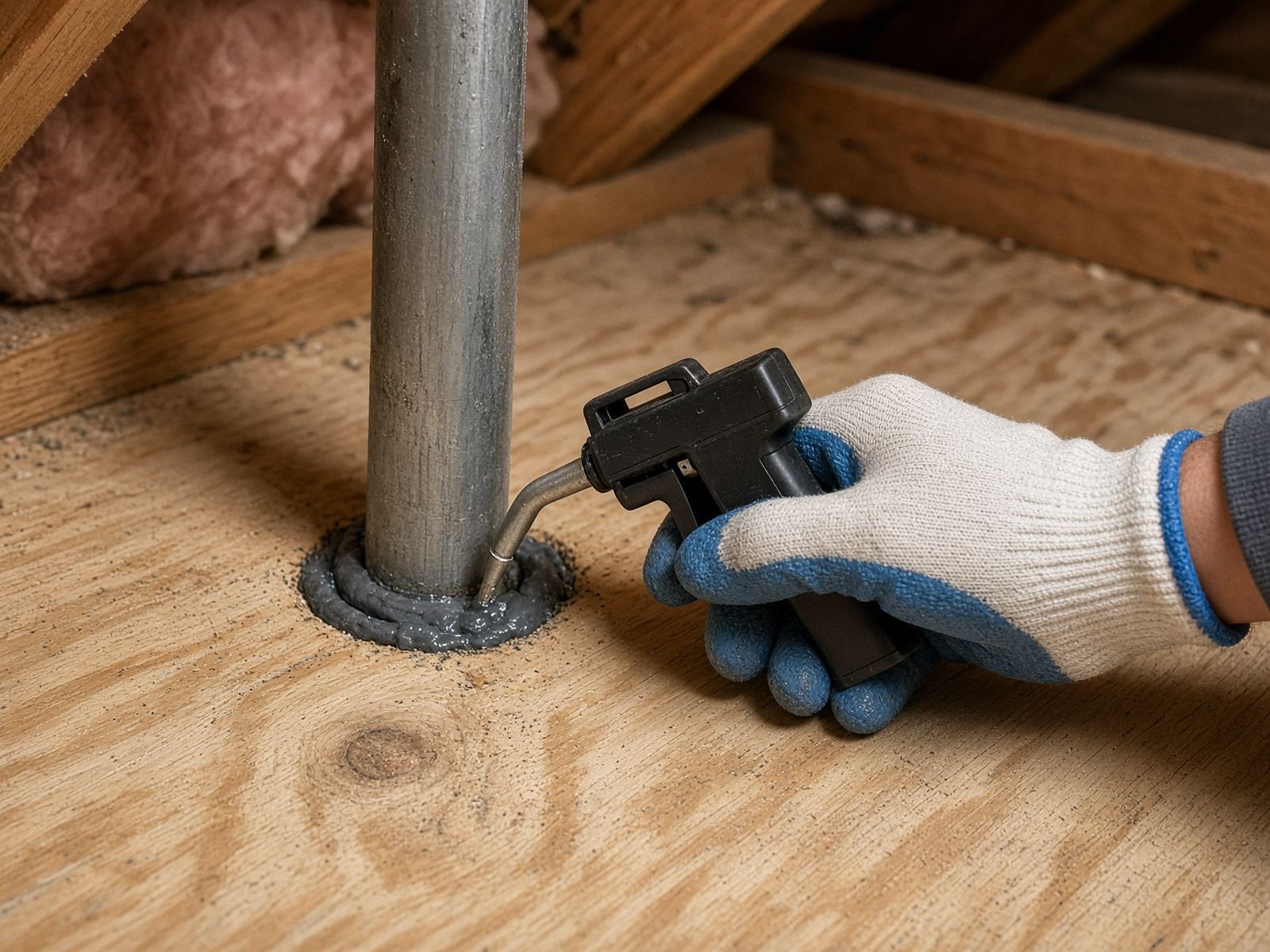
Loose fill is air-permeable. Fiberglass and cellulose both are. The energy code treats the ceiling as an air-barrier location. The product on top of it is not that barrier. The seal is foam or caulk at the top plates, the wire holes, the plumbing stacks, the hatch, and a bath fan that has to leave the building. A fan that dumps into the attic is how a new blow becomes a removal a year later.
We do not seal ducts, install a radiant barrier, or encapsulate a crawl space. Those are different trades, and they are not hiding inside an attic price. A non-IC can light keeps its clearance. It is not buried, and it is not a reason to remove the whole attic.
Quotes are prepared by Russell Y, a building scientist who is BPI certified and certified to perform blower door testing. A blower door measures the whole house at 50 pascals. Florida limits a new house in climate zones 1 and 2 to 7 air changes per hour when that test is required. An existing attic top-up is not that test. We print the number only when the door was run. Ask to see the BPI card at the estimate. We do not print a certificate number on this site.
Blown-in insulation, and the inches
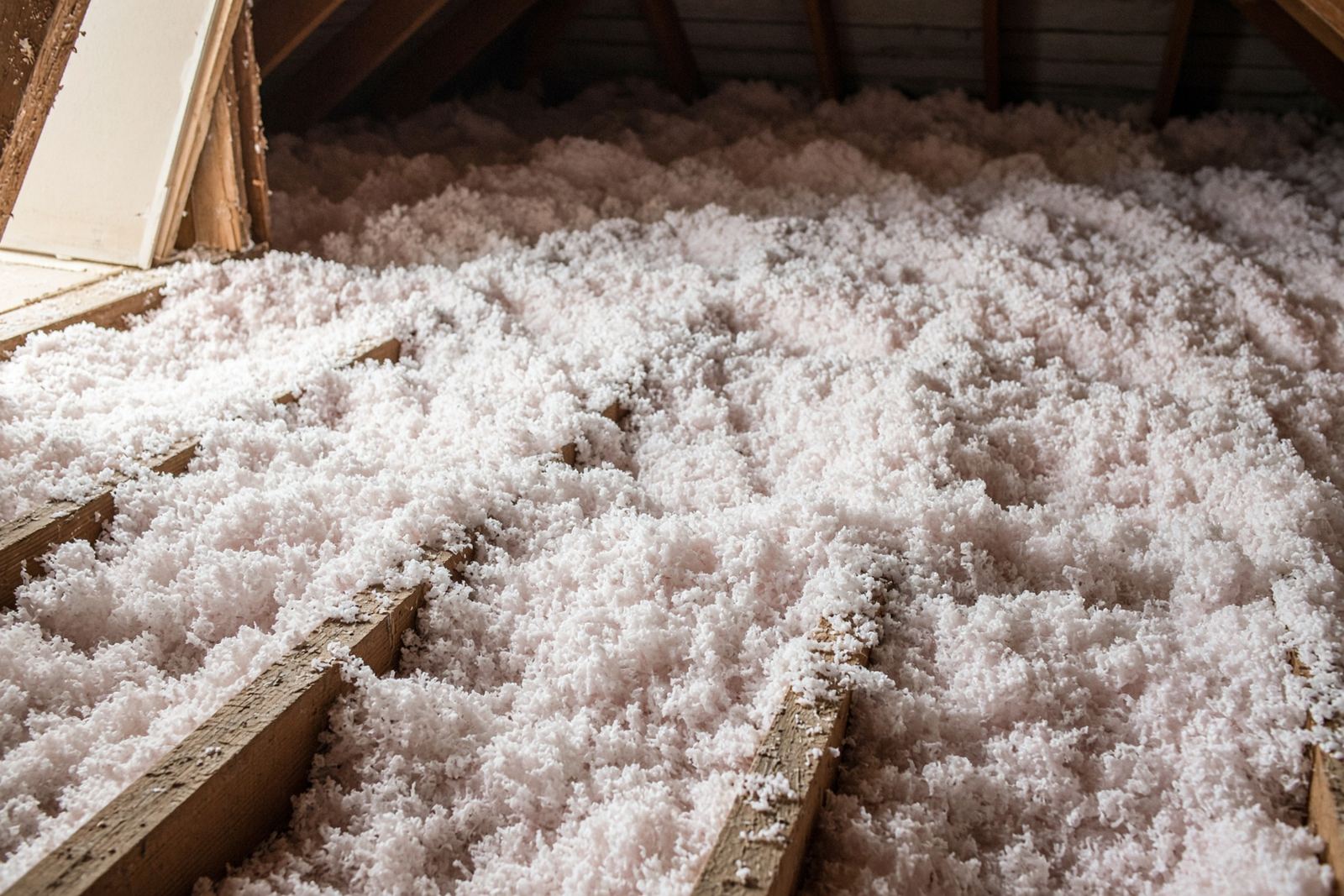
Blown-in insulation is loose fiberglass or cellulose, installed with a hose across the floor of a vented attic. New blown fiberglass is figured at about R-2.5 per inch. Fiberglass already in the attic, settled, is about R-2.2. New cellulose is about R-3.6 per inch and heavier. Cellulose already in place is about R-3.2. Using the new number on old fill is how a top-up comes up short.
From a bare ceiling, R-38 of new fiberglass is about 15 inches. R-38 of new cellulose is about 10.5 inches. Most Boca attics are not bare. Four inches of dry settled fiberglass is about R-9. The gap from that to R-38 is about 11 to 12 inches of new fiberglass, installed level. Six inches of settled fiberglass is about R-13, and the gap is about 10 inches of new fiberglass. The bag label from 1988 is not the measurement.
Cellulose packs denser. It is the right pick when the ceiling can carry the weight. A plaster lid in east Boca often cannot. Fiberglass is the usual top-up for that reason, not because a chart says one product wins. The chart ignores the ceiling, the existing fill, and the eaves.
The code floor, and the depth we leave
The code in force is the 2023 Florida Building Code, Eighth Edition. The residential volume took effect December 31, 2023. Energy Conservation is a separate volume. Palm Beach County is climate zone 1A. Boca Raton is not in the High-Velocity Hurricane Zone. That zone is Miami-Dade and Broward.
Table R402.1.2 sets the climate zone 1 ceiling minimum at R-30. Zone 2 is R-38. Boca is zone 1, so the prescriptive floor is R-30, not the R-38 that zone 2 uses as its minimum. The same table allows a ceiling U-factor of 0.035. Cardinal still installs R-38 on a vented attic floor and checks the depth. Installing above the floor is not a different code. It is a thicker blow.
R-49 and R-60 show up when someone copies the unamended national model code for a colder climate and calls it Florida. They are not the Boca prescriptive ceiling. Quoting them does not change the bags, and it does not make a zone 1 attic into zone 2 work. Going past R-38 adds bags. It does not seal an open hatch.
The Florida energy code wants depth markers for blown ceiling insulation, at least one every 300 square feet, marked in inches and facing the opening. A pile at the hatch and a bare eave averages to a lie. An 1,800 square foot attic needs markers you can read from the hatch, not one stake buried under the ridge.
Ventilation, so the new blow does not close the attic
If the insulation is on the floor, the attic stays vented. Section R806.2 of the 2023 Florida Building Code, Residential, sets the minimum net free ventilating area at 1/150 of the area of the vented space. Net free area is the opening that is actually open, after the screen and the louvers.
The exception allows 1/300 when both of these are true. Not less than 40 percent and not more than 50 percent of the required area is in the upper portion of the attic, not more than 3 feet below the ridge. The balance is in the bottom third. An 1,800 square foot ceiling needs 12 square feet at 1/150, or 6 square feet at the exception, and only if 2.4 to 3.0 of those 6 are up high. A turbine with the soffits painted shut does not meet either number.
Section R806.3 says the insulation shall not block the free flow of air at the eave. Not less than a 1-inch space is required between the insulation and the roof sheathing. That is the baffle. The blow stops there. In 33432 the eave is often short, so the inch is easy to lose. In a West Boca club the eave run is long, so a missed baffle shows up as a hot stripe along the outside wall. A powered fan is not a substitute for the intake.
East Boca and West Boca are the same rules
A closet hatch in 33432, a garage hatch downtown in 33431, and a long truss run in 33496 are different days. The product can be the same. Access, existing fill, and square footage are not. A near-me search from Glades Road and State Road 7 starts miles from 4263 NW 1st Ave. The page does not invent a shop there to look closer.
Dry original batts in Woodfield, The Hamptons, Boca Falls, and Sandalfoot Cove stay when they are dry. They come out when they are wet, moldy, or full of tunnels. A condominium with no attic is not either job. The crew does not have a gate code, and a planning range for an 1,800 square foot ranch does not price a club attic or a crawl under a short eave.
A planning range for about 1,800 square feet with about 4 inches of settled fiberglass, brought to R-38 in new blown fiberglass, is the range on the homepage. It does not include removal, a hard hatch, or foam. The bid is the number after the attic is seen, or after clear photos of the hatch and the existing fill.
What to look at before you call
Open the hatch and look, if you can do it without stepping off a joist. Dry and dusty and thin is a top-up. Stained, matted, or full of droppings is a removal. A bath fan with no duct leaving the roof is a leak you will pay to bury if nobody says so. Soffit vents you cannot see because the old fill has rolled into them are a baffle problem, not a reason to add another foot of insulation.
Count nothing from the street. Tile, a new roof, and a fresh paint job do not tell you the depth. The depth is in the attic, and it is in inches, not in the R-value printed on a batt that has been there since the house was built.
Call (561) 654-7698 and say which of the three you think it is: a removal, an attic that only needs a seal and a blow, or a roof deck that should be foam. The shop is Cardinal Insulation of Boca Raton LLC, 4263 NW 1st Ave, Boca Raton, FL 33431. Blown-in insulation is the first service. The award on the site is the 2026 Quality Business Award for best insulation contractor in Boca Raton. It is not a contractor license, and it is not the BPI card.
Questions on removal, attic insulation, and blown-in
Does every Boca Raton attic need insulation removal first?
No. Dry, dusty, thin fiberglass stays and is topped. Removal is for fill that is wet from a roof leak, moldy, or packed with rodent nesting. Tearing out a dry batt to sell a bigger job is not the work.
What R-value does Boca Raton require for attic insulation?
Palm Beach County is climate zone 1A. The 2023 Florida code floor for the ceiling is R-30. Cardinal installs R-38 on a vented attic floor and checks the depth. R-49 and R-60 are not the Boca prescriptive ceiling.
How deep is blown-in insulation at R-38?
From a bare ceiling, about 15 inches of new fiberglass at R-2.5 per inch, or about 10.5 inches of new cellulose at R-3.6 per inch. Four inches of settled fiberglass already in the attic is about R-9, so the new fiberglass gap to R-38 is about 11 to 12 inches, installed level.
Can you blow new insulation over what is already there?
Yes, when the old fill is dry. Settled fiberglass is figured at about R-2.2 per inch, not at the R-value printed on the bag when it was new. Wet or contaminated fill comes out first. The new blow is a separate price from the removal.
Fiberglass or cellulose for a Boca attic?
Fiberglass is the usual top-up because it is light. Cellulose has a higher R per inch and weighs more. A plaster ceiling in east Boca often cannot carry it. The attic decides, not a chart that treats both products as the same.
Is spray foam the same as blown-in attic insulation?
No. Blown-in sits on the floor of a vented attic. The attic stays hot. Spray foam belongs on a roof deck or a bonus room that should be inside the house, and only after those vents are closed. Two inches of closed-cell foam is about R-13, not an attic-floor R-38.
Does insulation removal include sanitizing?
No. After contaminated fill is out, sanitizing the deck is its own price. It is not mold remediation for the rooms below. The roof leak or the bath fan that caused the mess still has to be fixed before new insulation goes down.
Will new attic insulation cut the power bill by a set percent?
This site does not promise a bill number. A sealed ceiling and an even R-38 slow heat through the ceiling. An open hatch, a bath fan dumping into the attic, or a bare eave can erase that. The bid is not a savings guarantee.
How do I check that the blown-in depth is real?
Depth markers, at least one every 300 square feet, marked in inches and readable from the hatch. The Florida energy code asks for them on blown ceiling insulation. A pile at the hatch and a thin eave is not an average you should accept.
Where is the Boca Raton shop?
Cardinal Insulation of Boca Raton LLC is at 4263 NW 1st Ave, Boca Raton, FL 33431. Call (561) 654-7698. There is no second pin in West Boca or on State Road 7. Blown-in insulation is the first service.
Blown-in insulation · (561) 654-7698
More on Blown-in insulation
- Blown-in insulation in Boca Raton, neighborhood by neighborhood | Cardinal
- What blown-in insulation is | Cardinal
- Blown-in insulation or batts | Cardinal
- Fiberglass or cellulose for a blown attic | Cardinal
- How deep R-38 blown-in insulation is | Cardinal
- Blowing insulation over what is already there | Cardinal