The Hamptons attic, Woodfield Country Club | Cardinal
The Hamptons is one gated section inside Woodfield Country Club, West Boca, ZIP 33496. The club entrance is off Yamato Road, west of Jog Road, at Woodfield Country Club Parkway. Streets inside this section include Saint Annes and Harrington. The houses are single-family, mostly one story, under barrel tile. Building started in 1987. There is no shop inside the gate, and the crew does not have a code.
The attic that matters is the vented space over the flat ceiling. That ceiling is the thermal boundary. The roof deck is supposed to run hot and dump heat out the soffit and the ridge. Insulation belongs on the ceiling, not stuck between the rafters of a still-vented attic.
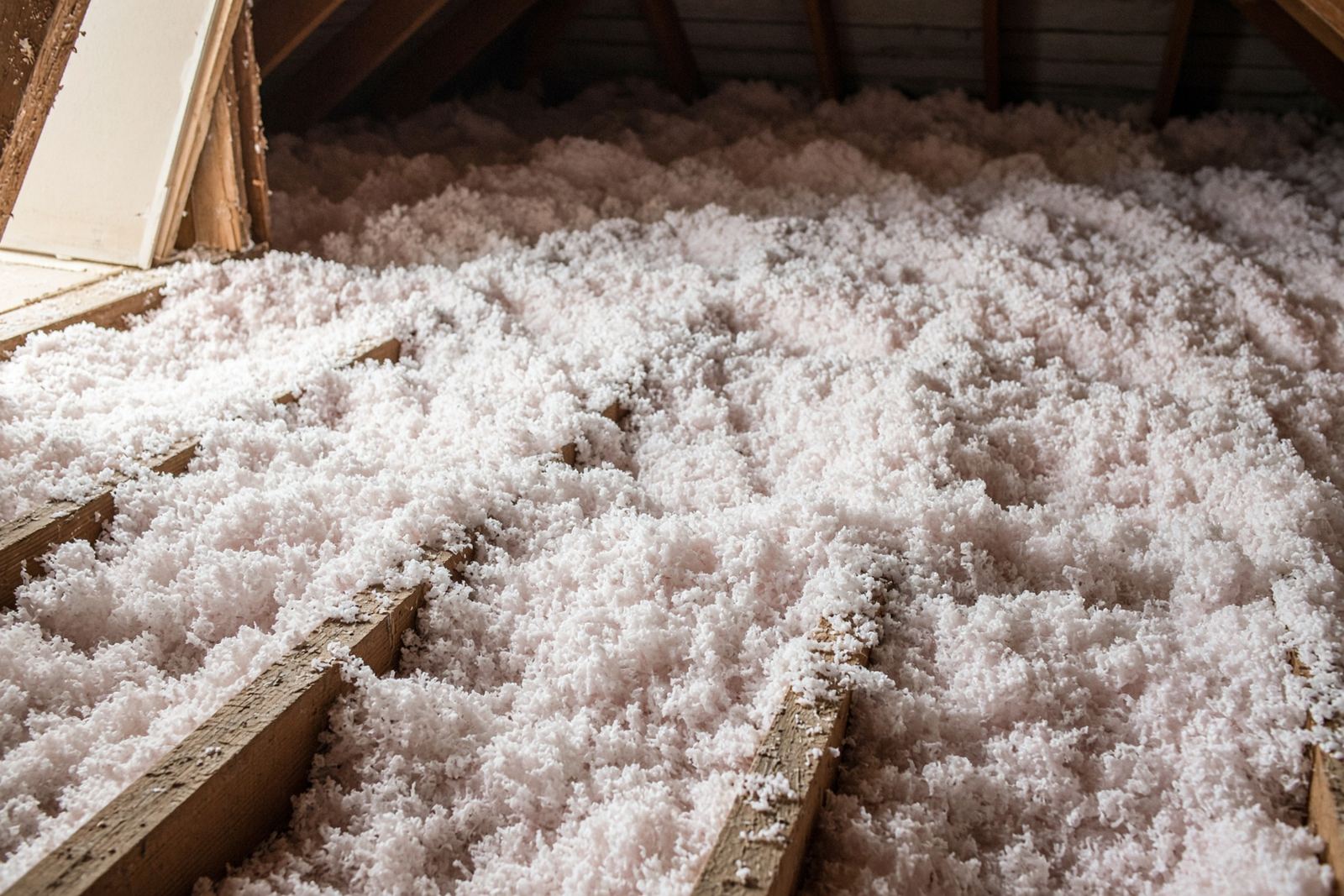
Original batts in a house from the late 1980s have usually slumped. Four inches of settled fiberglass is about R-9, figured at about R-2.2 per inch, not at the R-value printed on the bag when it was new. Florida's residential ceiling minimum in Climate Zone 1A is R-30. The install here is R-38. From that R-9, the gap is on the order of a foot of new blown fiberglass at about R-2.5 per inch. New cellulose is about R-3.6 per inch and needs fewer inches, and it only goes in if the ceiling can carry the weight.
The depth has to be even. A pile by the hatch and a bare eave is not R-38. Florida's energy code wants depth markers for blown ceiling insulation, at least one every 300 square feet, marked in inches and facing the opening. The eaves are where these attics come up short, because the truss pinches down and a batt never reached the plate.
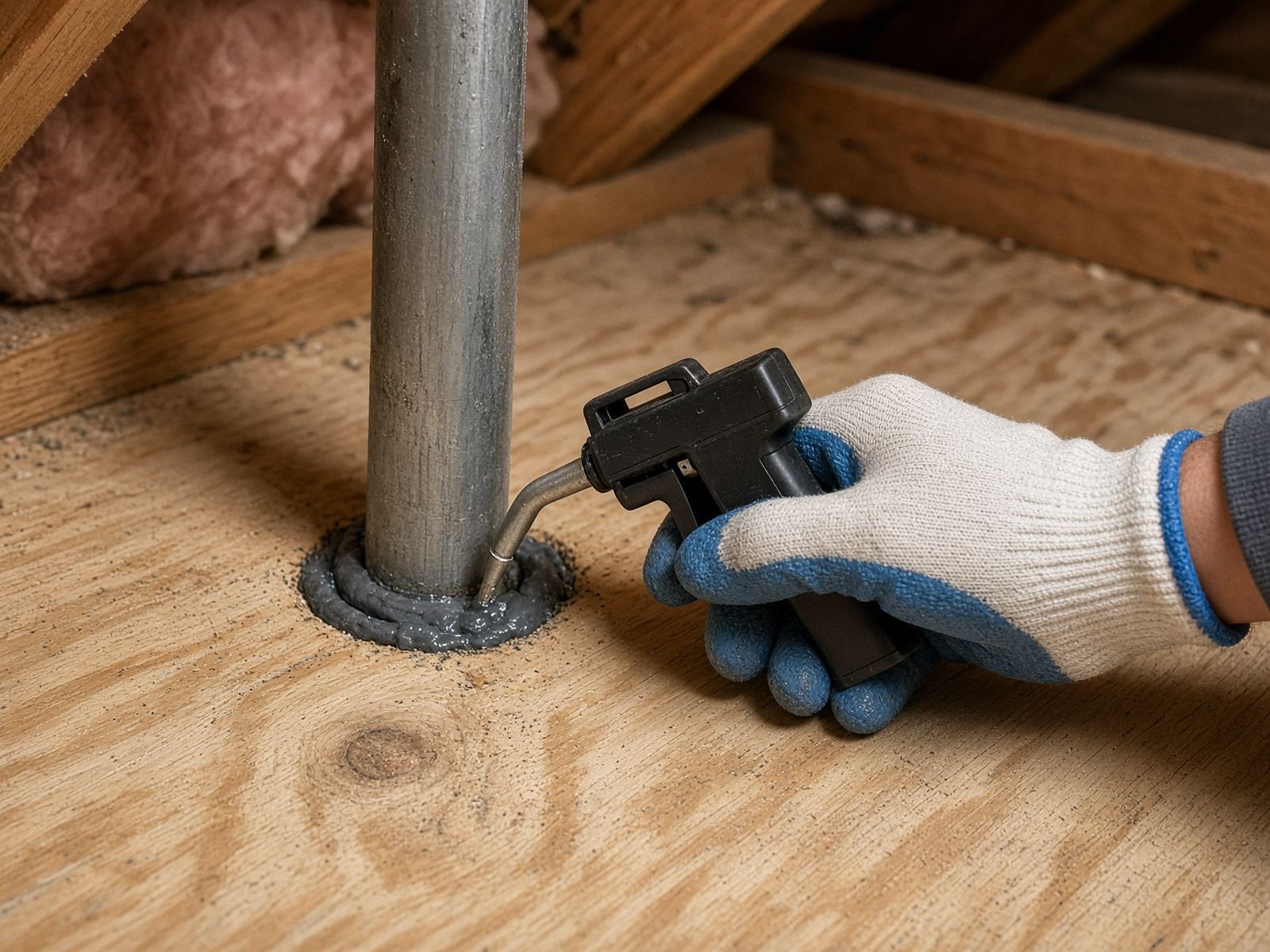
Air sealing comes before the hose. Top plates, open can lights, bath fans, the chimney or plumbing chase, and the hatch. Then baffles at the soffit so the new fill cannot close the intake. A blocked soffit heats the roof deck and leaves the insulation doing less than the bag promised.
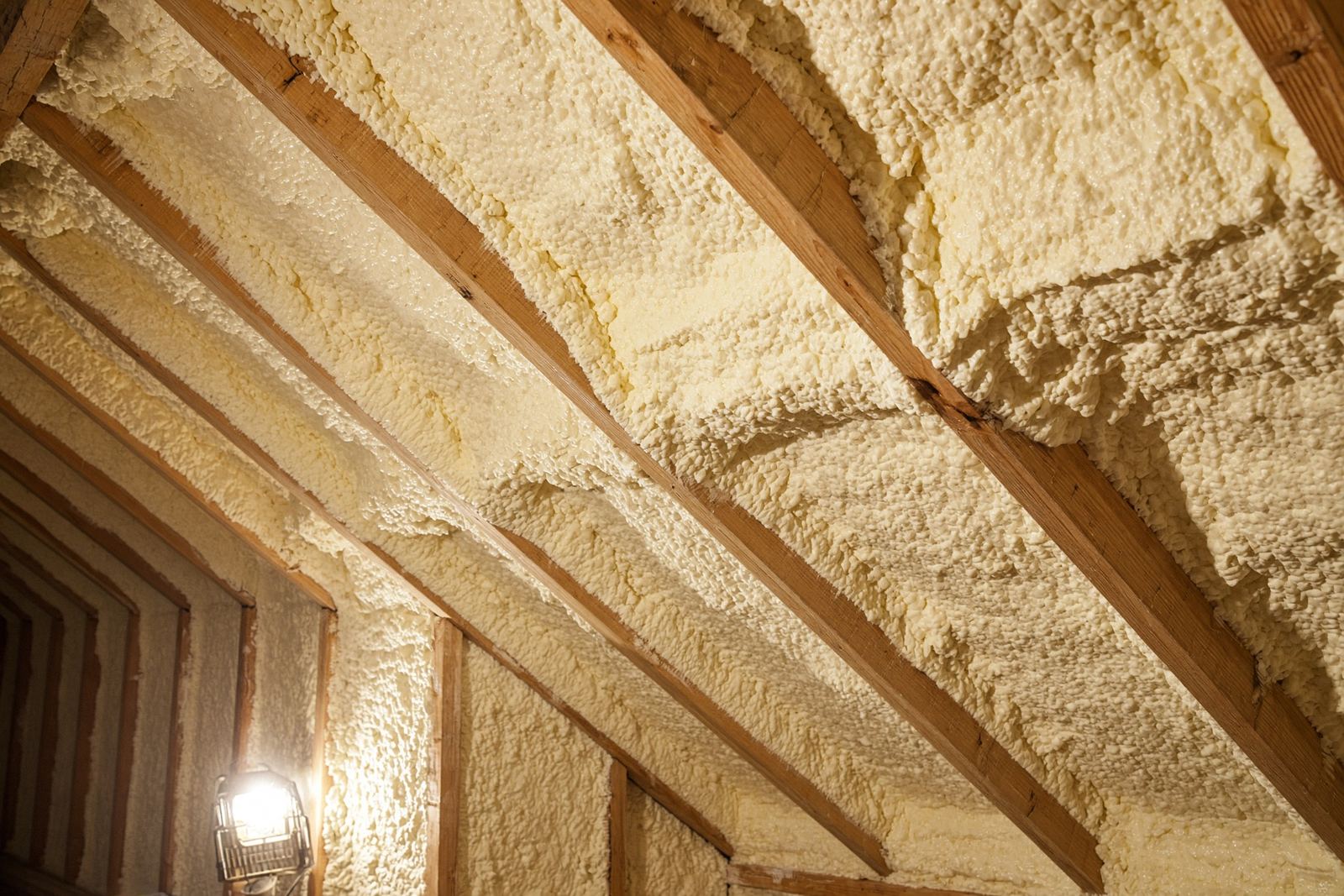
A bonus room cut into the slope is not part of the blow. That roof deck should be inside the house, which means spray foam and closed vents over that room only. The open attic over the rest of the house stays blown-in. Those are two prices even when they share one roof. Foam has a cure smell. Blown fiberglass and cellulose do not.
Dry fill stays and is topped. Wet fill, mold on the insulation, or nests and droppings come out first. Removal is not buried in a top-up number. Blowing over a contaminated layer holds it against the ceiling.
A Hamptons attic from 1987 is usually a truss roof, not rafters you can walk like a room. The center may have a catwalk. The bays on either side are the work. Kneeling on the drywall between trusses puts a hole in the ceiling of the room below. The blow is done from the truss, and the depth is read off a marker, not off a pile the hose left at the opening.
Open can lights are the other Hamptons problem. A lot of these houses still have cans that are rated to be covered and a few that are not. An uncovered can that is not insulation-contact rated does not get buried. It gets a box or it gets left clear. Covering the wrong can is a fire problem, not a higher R-value.
The Google listing is Cardinal Insulation, Cardinal Insulation of Boca Raton LLC, insulation contractor, at 4263 NW 1st Ave, Boca Raton, FL 33431. Blown-in insulation is the first service. Call (561) 654-7698. This neighborhood is not a second pin.
Neighborhoods · (561) 654-7698