Fiberglass or cellulose in a Boca Raton attic | Cardinal
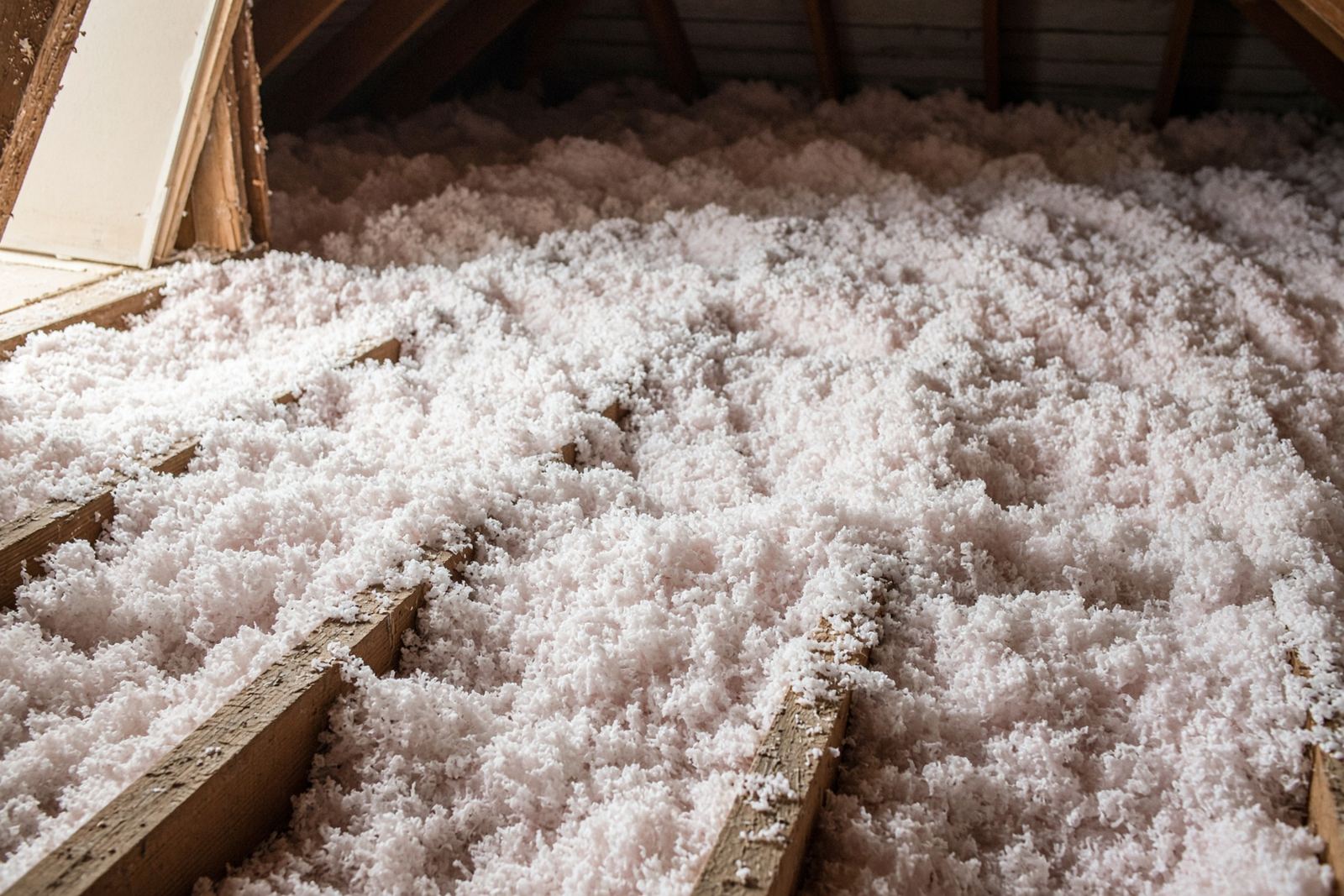
Both products are loose fill on a vented attic floor. The difference in Boca Raton is the ceiling under them. New fiberglass is lighter, about R-2.5 per inch, and it is the usual top-up over the fiberglass already in these houses. New cellulose is about R-3.6 per inch and heavier. An old plaster lid in east Boca often should not carry it.
The shop is 4263 NW 1st Ave, Boca Raton, FL 33431. Call (561) 654-7698. Palm Beach County is climate zone 1A. The code floor is R-30. The install is R-38. This page is how the material is chosen. It is not a bid.
The inches are not the same
From a bare ceiling, R-38 of new fiberglass is about 15 inches. R-38 of new cellulose is about 10.5 inches. A chart that gives both products one band, about R-3.2 to R-3.8 per inch, makes the fiberglass look thicker than the ruler will show. Settled fiberglass already in the attic is about R-2.2 per inch. Cellulose already in place is about R-3.2.
Four inches of old fiberglass is about R-9. The gap to R-38 is about 11 to 12 inches of new fiberglass, not 15 inches on top of what is already there. Six inches of old fiberglass is about R-13, and the gap is about 10 inches. The old layer still counts when it is dry. It does not count at the number printed on the bag the year the house was built.
Match the material that is already there
Most Boca attics, from the ranches in 33486 to the wider houses in 33433, 33496, and 33498, were built with fiberglass batts or an earlier blow of fiberglass. Dry fiberglass stays. New fiberglass goes over it. The two layers add. They do not cancel. Pulling dry batts out so a different product can be sold is not the job.
Cellulose over a thin, dry fiberglass layer is allowed when the ceiling can take the weight. It is not the default. Cellulose holds more moisture and it is heavier per inch of R-value. On a sound drywall lid in a newer West Boca house it can be the right call if that is what you want and the deck is clear. On a plaster ceiling in 33432 or along the older streets in 33431, the weight is the reason we stay with fiberglass.
When the old fill decides for you
Wet, matted, moldy, or rodent-packed fill comes out before either product goes back in. The material that was ruined does not pick the new material. The ceiling does. Removal is its own price. Sanitizing the bare deck, if the fill was contaminated, is a second price. The blow is a third.
A live roof leak is a roof repair. Neither fiberglass nor cellulose belongs on a wet deck. A non-IC can light needs clearance or a listed cover before either product is blown against it. The soffit still needs the 1-inch space in Section R806.3. The product does not change the vent.
What the price is actually buying
A planning range for about 1,800 square feet with about 4 inches of settled fiberglass, brought to R-38 in new blown fiberglass, is about $2,100 to $3,350. Cellulose on a ceiling that can carry it is a different bag count and a different weight, so it is not the same range. A tight east-side hatch, a long West Boca run, and removal move either number. The range is not a bid.
Depth markers, at least one every 300 square feet, face the hatch and are marked in inches. You are checking thickness, not a brand. An even field of fiberglass at the depth we sold is the same pass-fail as an even field of cellulose. A pile at the hatch fails either way.
What neither product does
Neither one seals the top plate, the wire holes, or the hatch. The seal is the first hour, then the hose. Neither one turns a vented attic into a room. Spray foam is the roof-deck job, and only after the vents over that roof are closed. Two inches of closed-cell foam is about R-13. It is not a substitute for a foot of fill on the floor.
Quotes are prepared by Russell Y, a building scientist who is BPI certified and certified to perform blower door testing. The test number is reported only when the test is run. Say whether the ceiling is plaster or drywall when you call. The shop is 4263 NW 1st Ave. Call (561) 654-7698. How to measure what is already up there is at https://cardinalinsulation.com/blog/how-to-measure-a-boca-raton-attic.
Questions on removal, attic insulation, and blown-in
Which do you install more often in Boca Raton?
Blown fiberglass, over dry fiberglass that is already there. Cellulose is for a ceiling that can carry the weight. Old plaster in east Boca often cannot.
Can you blow cellulose over fiberglass?
Yes, when both layers are dry and the ceiling can take the weight. The R-values add. On a plaster lid we usually stay with fiberglass.
How thick is R-38?
About 15 inches of new fiberglass, or about 10.5 inches of new cellulose, from a bare ceiling. Most Boca attics are not bare, so the new layer is thinner than that.
Where is the shop?
4263 NW 1st Ave, Boca Raton, FL 33431. Call (561) 654-7698.
Blown-in insulation · (561) 654-7698
More on Blown-in insulation
- Who writes a Cardinal Insulation quote | Cardinal
- How to read a Boynton Beach attic | Cardinal
- How to read a Delray Beach attic | Cardinal
- What a finished Boca Raton blown-in job looks like | Cardinal
- How to measure a Boca Raton attic before you buy insulation | Cardinal
- Which insulation a Boca Raton attic needs | Cardinal