Which insulation a Boca Raton attic needs | Cardinal
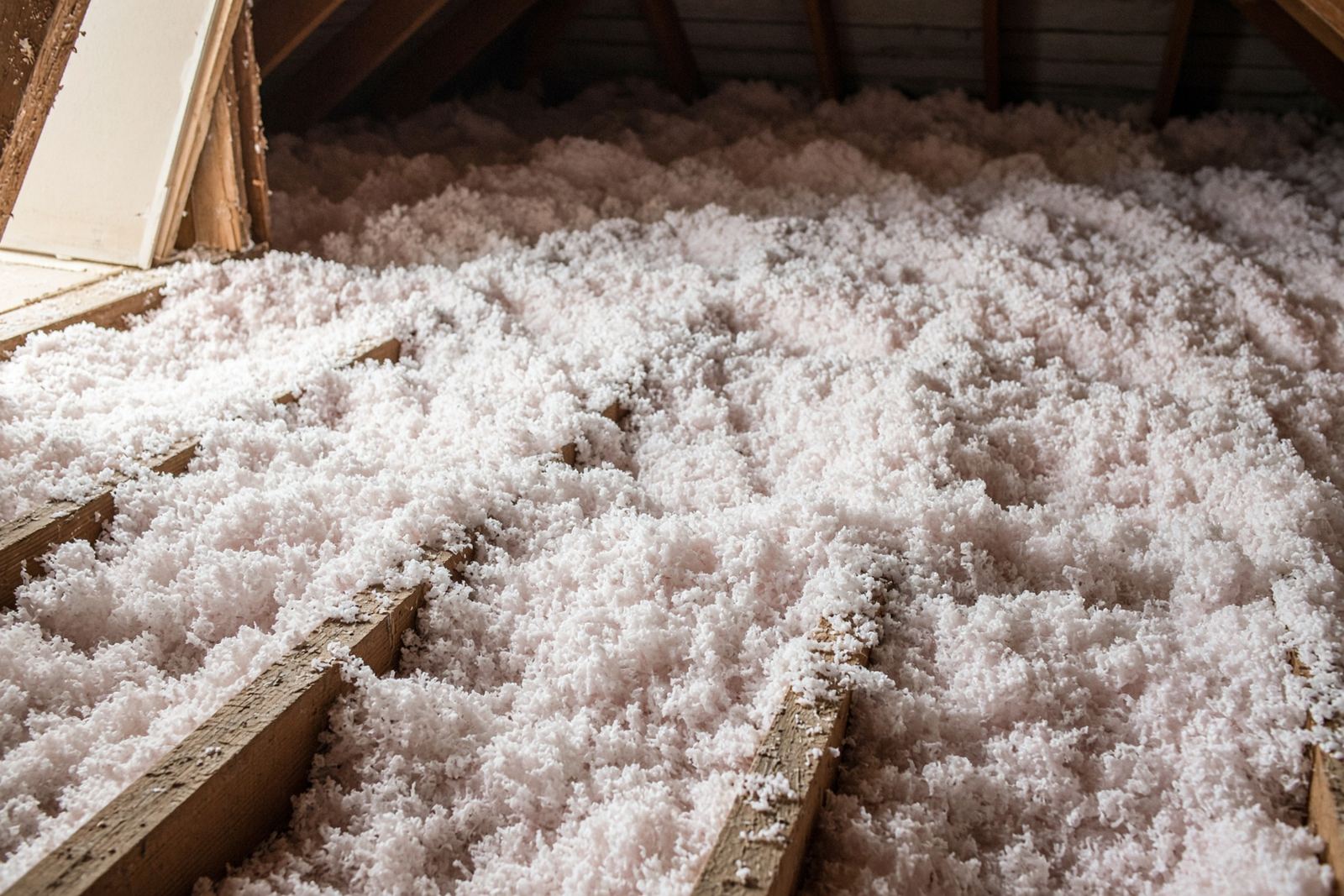
A Boca Raton attic is usually a vented space over a flat ceiling. The right product for that space is blown-in insulation on the floor, after the holes are sealed, to an even R-38. Batts that are already dry stay. Spray foam is a different roof. This is the decision, with the inches and the prices we actually use.
The shop is Cardinal Insulation of Boca Raton LLC, 4263 NW 1st Ave, Boca Raton, FL 33431. Call (561) 654-7698. Blown-in insulation is the first service. A range on this page is a planning number, not a bid.
Start with the roof you have
Most houses in 33431, 33432, 33486, 33433, 33496, and 33498 have a tile roof, a soffit, and an attic that is supposed to stay outside the house. The bedrooms are cooled by the air conditioner. The attic is not. Insulation on the attic floor slows heat moving through the ceiling. It does not turn the attic into a room.
That is why the first question is not which brand. It is whether the ceiling is flat and the attic is vented. If it is, the job is an air seal and a blow. If a bonus room or a low addition was built under the roof deck, that piece of roof is a different assembly, and it is priced on its own.
Blown-in is the attic-floor job
Blown-in fiberglass or cellulose goes on the attic floor after the leaks are sealed. New fiberglass is about R-2.5 per inch. Settled fiberglass already in the house is about R-2.2. New cellulose is about R-3.6 per inch and heavier, so an old plaster lid in east Boca often cannot carry it. Cellulose already in place is about R-3.2.
Palm Beach County is climate zone 1A under the 2023 Florida Building Code. Table R402.1.2 sets the ceiling floor at R-30. The install is R-38. From a bare ceiling, R-38 of new fiberglass is about 15 inches. Four inches of dry settled fiberglass, common in these attics, is about R-9, so the new layer is about 11 to 12 inches. A chart that asks for R-49 or R-60 is using a colder climate. It is not the Boca code.
A planning range for about 1,800 square feet with about 4 inches of settled fiberglass, brought to R-38 in new blown fiberglass, is about $2,100 to $3,350. A tight hatch, a long West Boca attic, removal, and foam move that number. The range is not a bid.
Dry batts stay
Fiberglass batts were the original install in a lot of Boca ranches. They gap at wires, at the top plate, and at the eave. Pulling every dry batt out so a new batt job can be sold does not fix those gaps. The leaks get sealed and the blow goes over the dry fill.
Batts come out when they are wet, matted, moldy, or full of nests. That removal is its own price. Sanitizing the bare deck, if the fill was contaminated, is a second price. The new blow is a third. Blowing over droppings traps the mess against the ceiling. A pest company gets the animals out. We do not claim that license.
Spray foam is not a substitute for the floor
Open-cell foam is about R-3.6 per inch. A 2x6 bay lands near R-20, not R-38. Closed-cell foam is about R-6.5 per inch. Two inches is about R-13. That is an air-seal coat on a roof deck, not a finished attic floor. Foam belongs on a roof that should sit inside the house, and only after the vents over that roof are closed.
The open attic over a flat ceiling stays blown-in. Foaming a vented roof and leaving the soffit open traps moisture against the deck. Foam also smells while it cures. Blown-in fiberglass and cellulose do not. If anyone in the house is sensitive, say so before a foam day is booked.
A bonus room over a garage in Broken Sound, Woodfield, or The Hamptons is the foam question. The main attic next to it is still the blow. Those are two lines on a proposal, not one.
The eave still has to breathe
If the insulation is on the floor, Section R806.2 still wants net free vent area of at least 1/150 of the attic, or 1/300 when the upper vents are in the top third and the soffit vents are in the bottom third. An 1,800 square foot ceiling needs 12 square feet at 1/150, or 6 square feet at the exception. Section R806.3 requires at least a 1-inch space between the insulation and the roof sheathing at the eave. The blow stops at the baffle.
East of I-95, in 33432 and along the shop streets in 33431, the eave is short and the hatch is often a closet. West of I-95, in 33496 and 33498, the attic is wide and a missed baffle shows up as a hot stripe along the outside wall. Covering the soffit to chase extra inches closes the attic. Depth markers, at least one every 300 square feet, face the hatch so the thickness can be read after the crew leaves.
What this is not
Insulating a garage door, hanging a radiant barrier, sealing ducts, or encapsulating a crawl space does not cool the bedroom. The bedroom ceiling is the air seal, then the blow. We do not fold those other trades into an attic price.
Quotes are prepared by Russell Y, a building scientist who is BPI certified and certified to perform blower door testing. An ACH50 number is reported only when the test is run. Ask to see the card at the estimate. The longer neighborhood walk is at https://cardinalinsulation.com/blog/blown-in-insulation-boca-raton-neighborhoods and the zone and bag-count note is at https://cardinalinsulation.com/blog/boca-raton-attic-r-value-zone-and-bag-count.
Questions on removal, attic insulation, and blown-in
Should I use spray foam or blown-in in Boca Raton?
A vented attic over a flat ceiling gets blown-in to R-38 after the leaks are sealed. Spray foam is for a roof deck or a bonus room, and only if the vents over that roof are closed.
Do you pull out the old batts?
Dry batts stay and are topped. Wet, moldy, or rodent-damaged fill comes out first. Removal is a separate price.
What R-value does Boca Raton require?
Climate zone 1A. The 2023 Florida ceiling floor is R-30. The install is R-38, about 15 inches of new fiberglass from a bare ceiling.
Where is the shop?
4263 NW 1st Ave, Boca Raton, FL 33431. Call (561) 654-7698.
Blown-in insulation · (561) 654-7698
More on Blown-in insulation
- Who writes a Cardinal Insulation quote | Cardinal
- How to read a Boynton Beach attic | Cardinal
- How to read a Delray Beach attic | Cardinal
- Fiberglass or cellulose in a Boca Raton attic | Cardinal
- What a finished Boca Raton blown-in job looks like | Cardinal
- How to measure a Boca Raton attic before you buy insulation | Cardinal