How to measure a Boca Raton attic before you buy insulation | Cardinal
You can learn more from ten minutes in the attic with a tape than from a page that tells every Boca house to blow to R-49. The measurement is the depth of what is already there, whether it is dry, and whether the eaves are still open. The rest of the price hangs on those three things.
Cardinal Insulation of Boca Raton LLC is at 4263 NW 1st Ave, Boca Raton, FL 33431. Call (561) 654-7698. This is how we read an attic. It is not a bid.
Get a number, not a story
Take a tape, a flashlight, and a board if the joists are the only thing that will hold you. Do not step on the drywall between the trusses. Measure the insulation in inches at the hatch, then again as far toward the eave as you can safely see. Write both numbers down. If they are not close, the attic is not one depth.
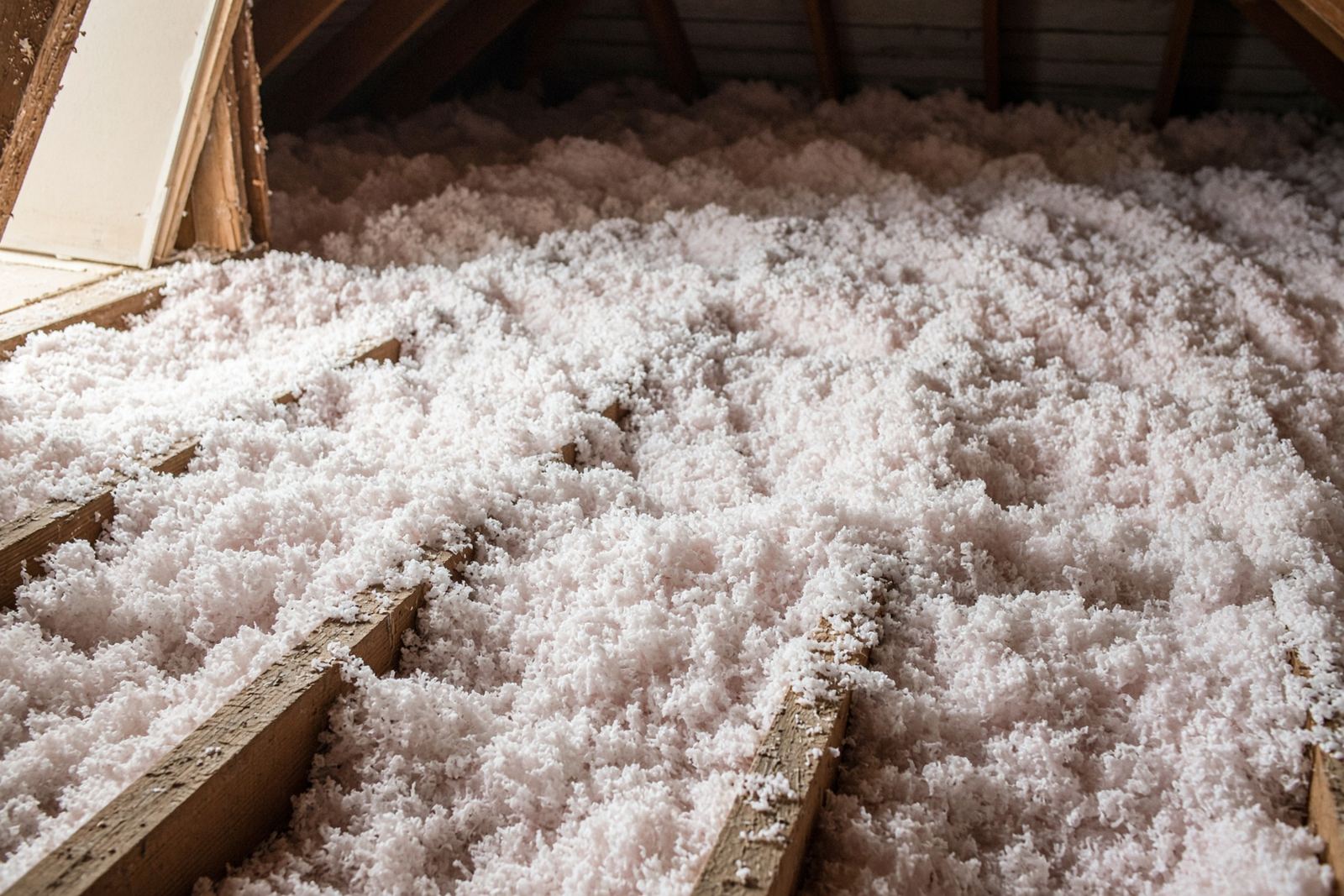
New blown fiberglass is about R-2.5 per inch. Fiberglass that has been in a Boca attic for years is about R-2.2 per inch. Four inches of that old fill is about R-9, not R-13, and not R-30. Six inches is about R-13. New cellulose is about R-3.6 per inch. Cellulose already in place is about R-3.2. A label that gives both products the same R-3.2 to R-3.8 band will not match the tape.
What R-30 and R-38 look like
Palm Beach County is climate zone 1A. The 2023 Florida Building Code, Table R402.1.2, sets the ceiling floor at R-30. Cardinal installs R-38 on a vented attic floor. From a bare ceiling, R-30 of new fiberglass is about 12 inches. R-38 is about 15 inches. R-38 of new cellulose is about 10.5 inches, and it weighs more. An old plaster ceiling in east Boca often should not carry cellulose.
Most of these attics are not bare. If you measured 4 inches of dry settled fiberglass, the gap to R-38 is about 11 to 12 inches of new fiberglass, installed level. The old layer still counts. A proposal that ignores it and sells 15 new inches is selling a bare-ceiling job you do not have. A proposal that sells R-49 or R-60 as the Boca requirement is using a colder climate.
Dry, wet, or full of nests
Color and smell matter as much as the inches. Dry fiberglass is dusty and still has some loft. Wet fill is matted, stained, or stuck to the deck. Mold on the insulation, not a spot of dust, means that layer comes out. Droppings, tunnels, and nests mean the same thing. Blowing over them holds the mess against the ceiling.
A roof stain on the deck is a roof repair first. Insulation on a live leak stores the water. Removal, if the fill has to come out, is its own price. Sanitizing the bare deck is a second price. The new blow is a third. A single square-foot number that includes all three is how one of them gets skipped.
A planning range for about 1,800 square feet with about 4 inches of dry settled fiberglass, topped to R-38 in new blown fiberglass, is about $2,100 to $3,350. That is the top-up, not the tear-out. A tight hatch in 33432 or a long attic in 33496 moves it. The range is not a bid.
The eave and the cans
Shine the light at the soffit. If the fill is packed into the vent, the attic cannot take air in. Section R806.3 requires at least a 1-inch space between the insulation and the roof sheathing. The baffle is what holds that inch. An 1,800 square foot ceiling needs about 12 square feet of net free vent at the 1/150 rule in Section R806.2, or about 6 square feet if the upper vents qualify for the 1/300 exception. Extra inches that close the soffit do not raise the R-value of the rooms. They close the attic.
Look at the lights. A recessed can that is not rated for insulation contact needs clearance or a listed cover. Burying it to hit a depth number is how a fire starts. A bath fan that ends in the attic, instead of a duct to the outside, is dumping shower moisture under the roof. Note it. The hose does not fix it.
East Boca and West Boca are not the same tape
In 33432 and along the shop streets in 33431 the hatch is often a closet and the eave is short. You may only get one honest measurement, at the opening, and a look down the bay. Say that when you call. In 33486 the ranches are low. In 33496 and 33498 the attic is wide, and the thin spot is usually the outside wall, not the hatch. Measure both. A condominium with no scuttle is not this job.
Depth markers, at least one every 300 square feet, marked in inches and facing the hatch, are how you check the crew later. If the marker reads less than what you were sold, the attic is short. A bag count with no marker is a story.
Quotes are prepared by Russell Y, a building scientist who is BPI certified and certified to perform blower door testing. The test number is reported only when the test is run. Bring the two depths you wrote down. The longer note on the zone and the bag chart is at https://cardinalinsulation.com/blog/boca-raton-attic-r-value-zone-and-bag-count.
Questions on removal, attic insulation, and blown-in
How do I convert inches of old insulation to R-value?
Settled fiberglass is about R-2.2 per inch. Four inches is about R-9. Six inches is about R-13. Do not use the new-product R-2.5 on fill that has been up there for years.
What should I measure besides the depth?
Whether the fill is dry, whether the soffit is still open, and whether any can lights are buried. Wet fill and nests come out before any new blow.
Where is the shop?
4263 NW 1st Ave, Boca Raton, FL 33431. Call (561) 654-7698.
Blown-in insulation · (561) 654-7698
More on Blown-in insulation
- Who writes a Cardinal Insulation quote | Cardinal
- How to read a Boynton Beach attic | Cardinal
- How to read a Delray Beach attic | Cardinal
- Fiberglass or cellulose in a Boca Raton attic | Cardinal
- What a finished Boca Raton blown-in job looks like | Cardinal
- Which insulation a Boca Raton attic needs | Cardinal