What a finished Boca Raton blown-in job looks like | Cardinal
A finished blown-in job in Boca Raton is something you can check from the hatch. The field is even. The depth markers face you. The soffits are still open. The hatch itself is weatherstripped. A pile of insulation at the opening, with the eaves bare, is not finished. It is a photo of the easy part.
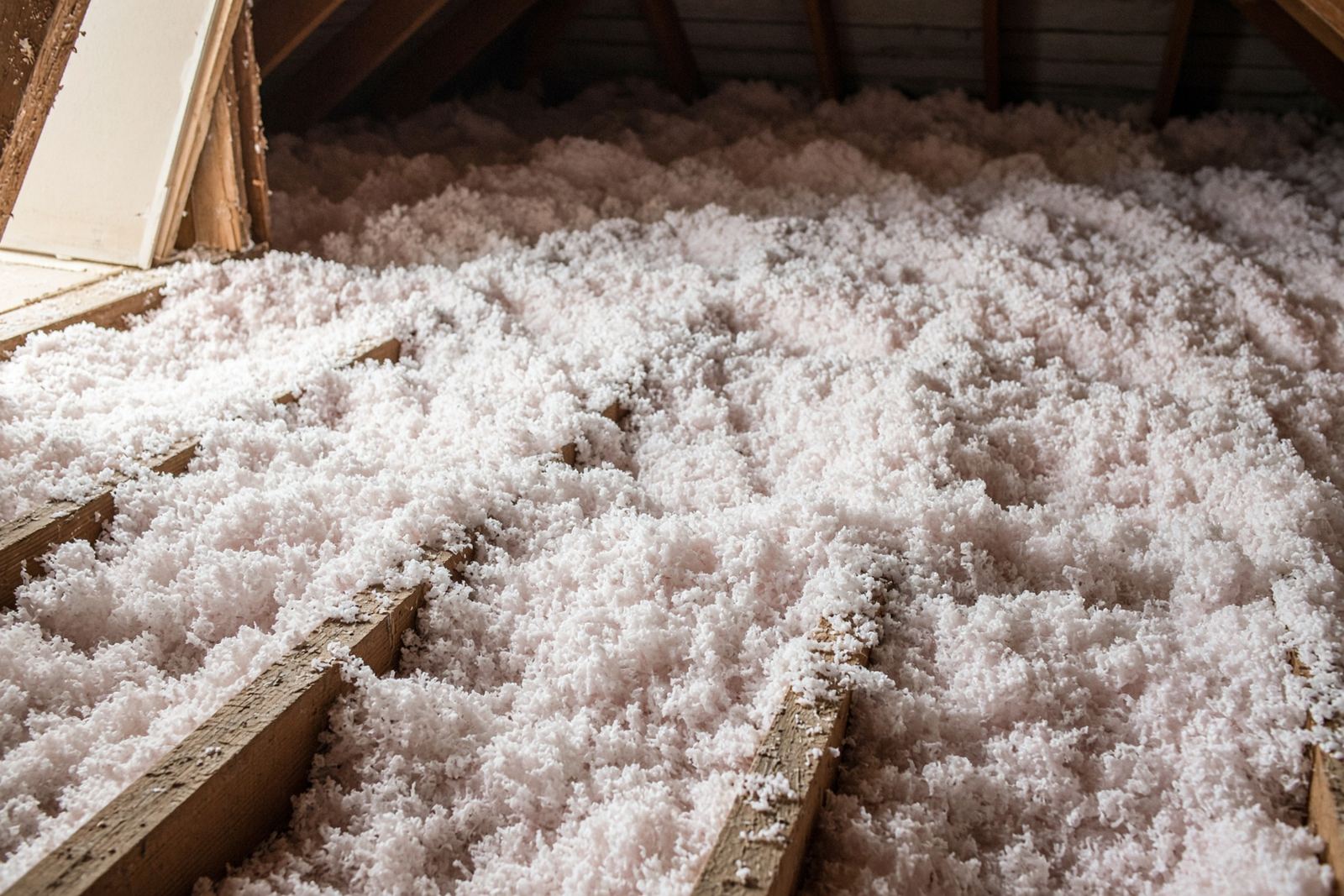
The shop is Cardinal Insulation of Boca Raton LLC, 4263 NW 1st Ave, Boca Raton, FL 33431. Call (561) 654-7698. This is the inspection. The price is still a bid after we see the attic, not a number from this page.
The depth you were sold
Florida wants depth markers for blown ceiling insulation, at least one every 300 square feet, marked in inches and facing the opening. An 1,800 square foot attic needs several, not one card at the hatch. Read them. If the fill is below the mark at the far bay, the attic is short, no matter how many bags were written on the invoice.
R-38 from a bare ceiling is about 15 inches of new fiberglass at about R-2.5 per inch. Most Boca attics are not bare. Four inches of dry settled fiberglass is about R-9, so the new layer is about 11 to 12 inches. The marker should match the thickness that was sold for the gap, not a colder-climate R-49. Palm Beach County is climate zone 1A. The code floor is R-30. The install is R-38.
The eaves are still a vent
Look past the marker to the soffit. The insulation stops at the baffle. Section R806.3 requires at least a 1-inch space between the insulation and the roof sheathing. If the fill is packed into the vent, the intake is gone. The attic will run hotter, and after a rain it will stay wetter. That is not extra R-value. It is a closed soffit.
East of I-95, in 33432 and 33431, the eave is short and easy to bury from a closet hatch. West of I-95, in 33496 and 33498, the eave run is long, and a missed baffle shows up as a hot stripe along the outside wall. Both fail the same way. The light test is the same: you should see the chute, not a wall of fiberglass in the soffit.
What had to happen before the hose
You will not see the seal once the fill is down, which is why it is worth looking first. The top plates, the wire holes, and the open chases should already be closed. A non-IC can should have clearance or a listed cover, not a blanket of fiberglass on the lamp. A bath fan should duct outside, not end in the attic. The hatch or the pull-down stairs should be weatherstripped and covered. Those are the leaks. The blow does not close them.
Dry batts that were already there should still be there, under the new field. They were not pulled so a larger job could be sold. Wet fill, mold on the insulation, and nests should be gone. If you can still see droppings on the deck at the edges, the removal was not finished. Removal was its own price. It is not included in a top-up.
The hatch and the house
The attic opening is part of the ceiling. A bare plywood door sweats and leaks every hour the air conditioner runs. The finished hatch has weatherstrip and a cover that stays put. The crew should not have left bags, boards, or a trough of fill that falls into the hallway when you open it.
The rooms under the work should be as they were, plus the hatch. We do not leave a path of insulation from the truck to the closet. A planning range for the blow itself, about 1,800 square feet with 4 inches of settled fiberglass brought to R-38, is about $2,100 to $3,350. That range does not include a removal you discovered after the boards came up. It is not a bid.
What is not part of this inspection
A radiant barrier on the rafters, a garage door kit, and a crawl-space liner are not the attic floor. Do not accept them as proof the ceiling was done. Spray foam on a vented roof, with the soffits still open, is the wrong system. Foam belongs on a deck whose vents were closed on purpose. Two inches of closed-cell foam is about R-13, not this R-38.
Quotes are prepared by Russell Y, a building scientist who is BPI certified and certified to perform blower door testing. Ask to see the card. A blower-door number is reported only when the test is run. If the markers are short or the soffit is buried, call (561) 654-7698 before you pay the balance. How the inches are figured is at https://cardinalinsulation.com/blog/how-to-measure-a-boca-raton-attic.
Questions on removal, attic insulation, and blown-in
How do I know the blown-in insulation is thick enough?
Read the depth markers. There should be at least one every 300 square feet, in inches, facing the hatch. The far bay has to match the hatch, not just the pile at the opening.
Should the soffit vents be covered?
No. The fill stops at the baffle. At least a 1-inch space stays between the insulation and the roof sheathing.
Is removal included?
No. A top-up leaves dry fill in place. Wet, moldy, or rodent-damaged fill is a separate price, before the new blow.
Where is the shop?
4263 NW 1st Ave, Boca Raton, FL 33431. Call (561) 654-7698.
Blown-in insulation · (561) 654-7698
More on Blown-in insulation
- Who writes a Cardinal Insulation quote | Cardinal
- How to read a Boynton Beach attic | Cardinal
- How to read a Delray Beach attic | Cardinal
- Fiberglass or cellulose in a Boca Raton attic | Cardinal
- How to measure a Boca Raton attic before you buy insulation | Cardinal
- Which insulation a Boca Raton attic needs | Cardinal